


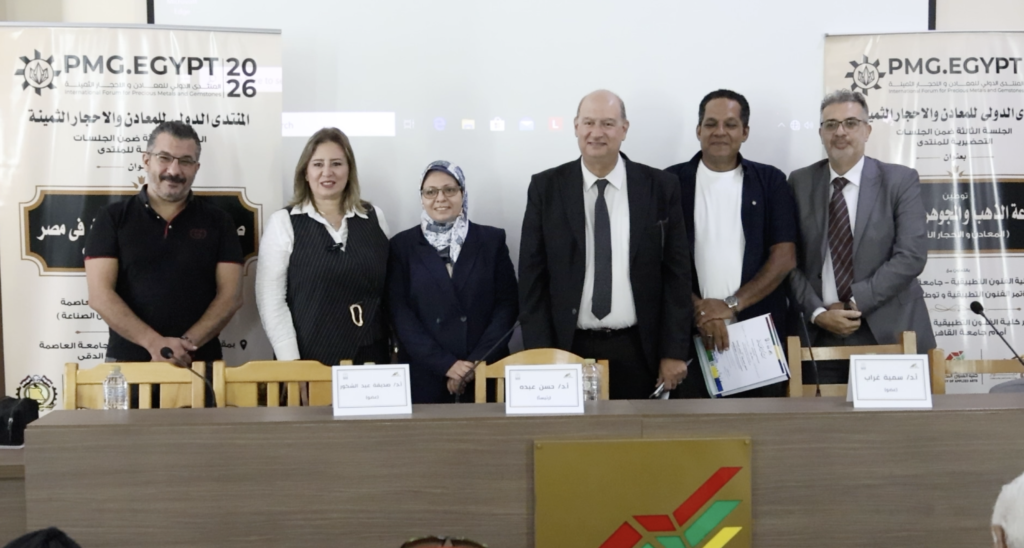
عقد المنتدى الدولي للمعادن والأحجار الثمينة جلسته الثالثة بعنوان: “توطين صناعة الذهب والمجوهرات في مصر”، بالتعاون مع كلية الفنون التطبيقية بجامعة العاصمة، جاءت الجلسة ضمن فعاليات المؤتمر الدولي الثامن للكلية، برعاية شعبة صناعة الذهب والمعادن الثمينة. وكنوز نيوز كشريك استيراتيجي بالمؤتمر الثامن للكلية.
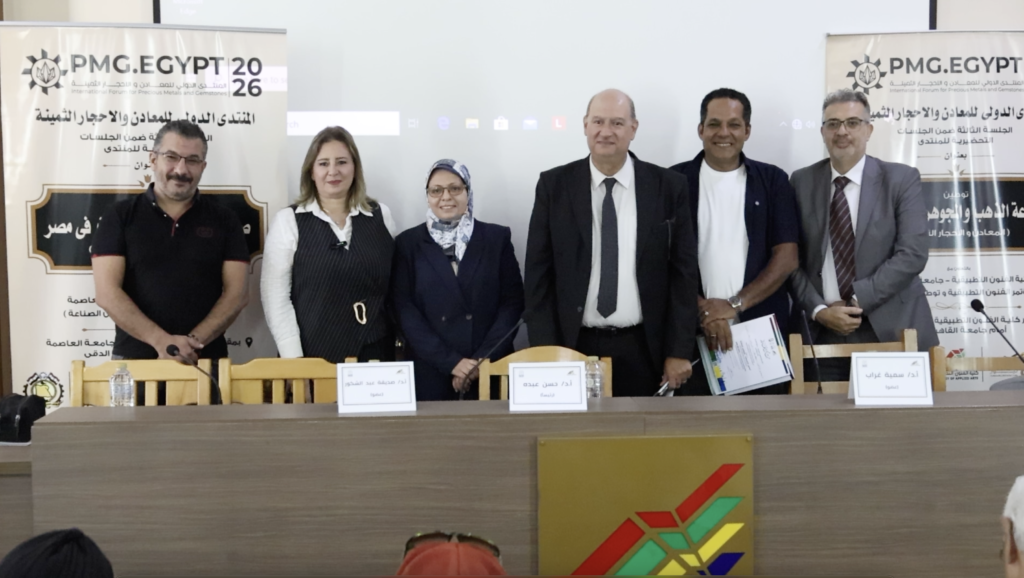
وشارك في الجلسة عميد كلية الفنون التطبيقية الدكتور شريف حسن، ود. تامر فاروق رئيس مركز تكنولوجيا الحلي بوزارة الصناعة، ومنير شاكر صاحب مصنع جينيس جولد، ومحمد غباشي المصمم والمثمن وخبير المعادن النفيسة، وجيهان الشعراوي رئيس المنتدى الدولي للمعادن والأحجار الثمينة، إلى جانب عدد من أعضاء هيئة التدريس والمتخصصين ومصممي الحلي والمجوهرات المصريين.
حيث ركزت الجلسة الثالثة على توطين صناعة الذهب والمجوهرات، وما يتطلبه ذلك من تطوير منظومة التعليم والتدريب، وربط الدراسة الأكاديمية بالتطبيق الصناعي والسوق، ودعم التصميم والبحث العلمي والتكنولوجيا، وتوفير الخامات، وتيسير إجراءات التصنيع والتصدير، وصولًا إلى بناء علامات مصرية قادرة على المنافسة في الأسواق الخارجية.
محتويات الخبر:
-
الإعلان عن مسابقة متخصصة في المجوهرات تشمل 4 مسارات، برعاية الفنون التطبيقية وتكنولوجيا الحلي
-
ربط التعليم بالصناعة.. تدريب عملي لإخراج مصمم وصانع جاهز لسوق العمل
-
ثلاث مراحل للدمغ قبل التصدير.. والمصنعون: الوقت عنصر حاسم في المنافسة
-
المصنعون يطالبون بتسريع الدمغ والتثمين: ثلاثة أسابيع قد تضيع صفقة تصدير
-
الصنايعي الدارس.. الحلقة المفقودة بين كلية الفنون التطبيقية وسوق المجوهرات
د. شريف حسن عميد الكلية: هذه الجلسة بداية التعاون وليس نهايته
وأكد عميد الكلية دكتور شريف حسن، في كلمته أن كلية الفنون التطبيقية ترتبط مباشرة بالصناعة، مشيرًا إلى تاريخها منذ عام 1939، وإلى ما تضمه من أقسام وبرامج تخدم القطاعات الإنتاجية المختلفة. وقال إن عنوان توطين الصناعة يتسق مع طبيعة الكلية ورسالتها، مؤكدًا استعدادها للتوسع في التعاون مع القطاع الصناعي وفتح مسارات جديدة تخدم احتياجات سوق العمل.
وأضاف أن المرحلة المقبلة يمكن أن تشهد تعاونًا أكبر مع المنتدى ومركز تكنولوجيا الحلي، مشددًا في ختام الجلسة على أن هذا اللقاء “بداية التعاون وليس نهايته”.
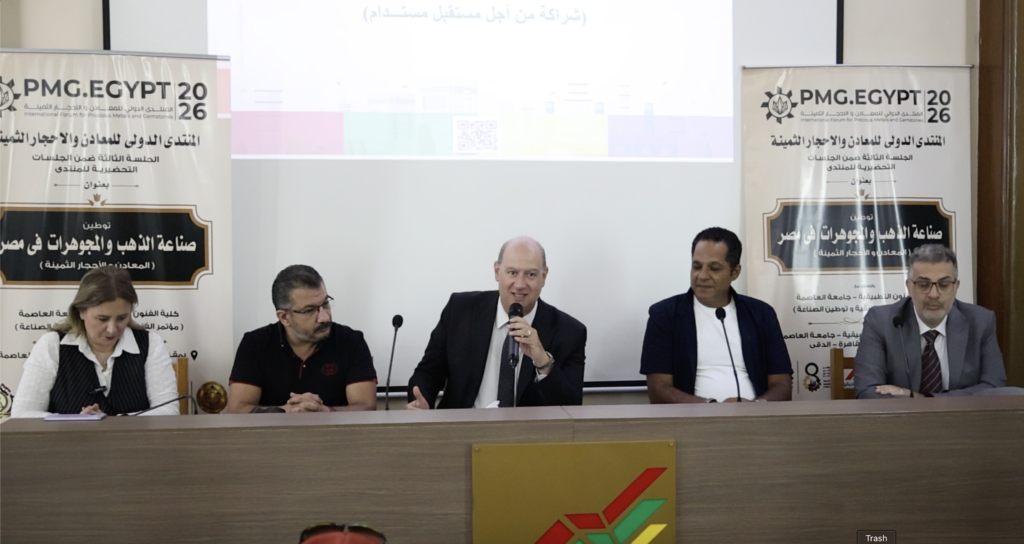
جيهان الشعراوي: مصر تمتلك كل حلقات الصناعة لكنها لا تستفيد منها كما ينبغي
وقالت جيهان الشعراوي إن موقع مصر على خريطة صناعة الذهب والمجوهرات العالمية لا يتناسب مع تاريخها وإمكاناتها الحالية، مؤكدة أن مصر تمتلك خبرة ممتدة في التعدين والتكرير والتصنيع والتصميم، إلى جانب قاعدة صناعية تطورت بصورة كبيرة خلال السنوات الأخيرة.
وأضافت أن المشكلة الأساسية ليست في غياب الإمكانات، وإنما في عدم ربط حلقات سلسلة القيمة ببعضها، وقالت: “عندنا التعدين، التكرير، التصنيع، والتصميم، وعندنا القوى البشرية والإبداع والفن والتاريخ… المشكلة هي أن نربط كل حلقات سلسلة القيمة ببعضها لنصنع لها قيمة مضافة حقيقية تعظم موارد الدولة وتفتح فرص عمل للشباب”.
وانتقدت استمرار تصدير الخام في الوقت الذي تتحدث فيه الدولة عن تعظيم القيمة المضافة للخامات الأخرى، مؤكدة أن تطوير الصناعة يتطلب دعم التصميم والتدريب والتصدير وبناء علامات مصرية قادرة على المنافسة.
د. تامر فاروق: الفجوة الحقيقية بين الدراسة النظرية والتدريب العملي
وقال د. تامر فاروق إن مركز تكنولوجيا الحلي يعمل على تطوير القطاع من خلال التدريب والدعم الفني للمصانع، مشيرًا إلى أن أحد أبرز التحديات يتمثل في الفجوة بين الدراسة الأكاديمية والمهارة العملية.
وأوضح أن كثيرًا من الخريجين يمتلكون أساسًا نظريًا جيدًا، لكنهم يحتاجون إلى تدريب عملي أكثر كثافة، مؤكدًا أهمية التعاون بين الكلية والمركز بحيث يدرس الطالب الجانب النظري داخل الكلية ويحصل على التدريب التطبيقي داخل المركز.
وأضاف أن المركز استقبل متدربين من خلفيات مختلفة، بينهم مهندسون وأطباء وأشخاص لم يدرسوا الفنون أصلًا، مؤكدًا أن الموهبة والتدريب يمكن أن يفتحا المجال أمام شرائح أوسع للدخول إلى صناعة الحلي.
وأشار إلى أهمية التخصص داخل ريادة الأعمال، وقال إن كل رائد أعمال يحتاج إلى أن يحدد النقطة التي يريد التخصص فيها ويتعمق فيها حتى يصبح خبيرًا فيها.
منير شاكر: السوق يحتاج إلى الصنايعي الدارس
وقال منير شاكر إن أكبر مشكلة في الصناعة من وجهة نظره هي نقص الصانع المدرب علميًا، مضيفًا: إحنا ما عندناش صنايعي دارس. وأكد أن الصناعة لا تحتاج إلى الاعتماد الكامل على الماكينات بقدر حاجتها إلى فني يفهم التصميم ويستطيع تنفيذه بيده، مشيرًا إلى أن كثيرًا من القطع يمكن تنفيذها يدويًا بجودة عالية.
وأضاف أن الهدف يجب أن يكون تخريج شخص قادر على أن يكون مصممًا وصانعًا في الوقت نفسه، لا مجرد مستخدم للآلة.
كما أوضح أن مصنعه يعمل كثيرًا بنظام Special Order، حيث يأتي العميل بفكرة أو رسم خاص ويتم تنفيذه حسب الطلب، وقال إن هذا النوع من العمل يحمل تحديًا فنيًا لأنه يتطلب تحويل فكرة موجودة في ذهن العميل إلى قطعة قابلة للتنفيذ.
محمد غباشي: الروتين يبطئ الصناعة والتصدير
وركز محمد غباشي على مشكلات الإجراءات والخامات، مؤكدًا أن الصناعة لا تعاني بالدرجة الأولى من نقص التمويل أو القدرة الإنتاجية، وإنما من الروتين وصعوبة بعض الإجراءات.
وقال إن المنتج قد يمر بعدة مراحل من الدمغ والتثمين قبل وصوله إلى مرحلة التصدير، مضيفًا: ” الخام الذي نستخدمه يتم دمغه ثلاث مرات مما يرفع السعر ويبطئ عملية الإنتاج. مرة عند شراء الخام، ومرة بعد التصنيع، ومرة عند تصديره، مؤكدا صعوبة الانتظار لمدة ثلاث أسابيع لتصدير منتج في حين العميل يستقبل خلال نفس المدة ٣ شحنات يستوردها من تركيا”.
وطالب بتبسيط الإجراءات دون إلغاء الرقابة، مؤكدًا أن المشكلة بالنسبة للمصنع هي الزمن الذي تستغرقه الإجراءات مقارنة بسرعة الأسواق الخارجية. كما أشار إلى مشكلة توافر النحاس الأحمر باعتباره من الخامات المهمة في صناعة المشغولات، وطالب بتسهيل وصول المصانع إليه.
الهوية المصرية والتقليد
وانتقد غباشي تراجع الهوية التصميمية المصرية، مؤكدًا أن السوق اتجه في بعض الأحيان إلى استنساخ تصميمات خليجية أو أجنبية بدلًا من تطوير بصمة محلية.
وقالت جيهان الشعراوي إن المشكلة لا تتوقف عند تقليد التصميمات الأجنبية، بل تمتد إلى ضعف استثمار التاريخ المصري كمصدر للتصميم، مضيفة أن الدور العالمية تستلهم من التاريخ المصري بصورة أوسع كثيرًا من الاقتصار على اللوتس والهرم ومفتاح الحياة.
وأكدت أن الحرفية نفسها تمثل قيمة اقتصادية يمكن تسويقها، قائلة إن الدور العالمية لا تبيع المعدن والأحجار فقط، وإنما تبيع أيضًا ساعات العمل، والتصميم، والمهارة، وقصة القطعة.
الملكية الفكرية.. والحماية لا تكفي وحدها
وتناول النقاش كذلك ملف حقوق الملكية الفكرية، حيث أشار محمد غباشي إلى أن تسجيل التصميمات قد يستغرق وقتًا طويلًا، بما قد يفقد المنتج ميزته السوقية.
وقالت جيهان الشعراوي إن ملف الملكية الفكرية أصبح تحت مظلة المجلس الأعلى للملكية الفكرية، مؤكدة أن حماية التصميم وحدها لا تكفي، لأن تغييرات محدودة قد تنتج تصميمًا مختلفًا. وهي القضية المدرجة على قائمة جلسات المنتدى خلال الفترة القادمة بإذن الله.
وأضافت أن المسار الأكثر فاعلية قد يكون في ابتكار تقنيات وأبحاث علمية وآليات تصنيع وتركيب وترصيع جديدة يمكن تسجيلها وحمايتها، داعية إلى تفعيل دور مراكز البحث العلمي في تطوير حلول تقنية تخدم الصناعة.
ومن جانبه، قال د. تامر فاروق إن الحماية مهمة، لكن الأهم أن يستمر المصمم في الابتكار والإنتاج، مشيرًا إلى أن التميز المستمر يصنع قيمة للعلامة أكثر من الوقوف عند تصميم واحد، مؤكدا أن الدور الشهيرة تفتخر بأن تصميماتها يتم تقليدها ويُصنع منها نسخ غير أصلية للأسواق الأقل قدرة على شراء الاصلية.
التكنولوجيا والحرفة
واتفق المتحدثون على أن التكنولوجيا يجب أن تخدم الحرفة لا أن تلغيها.
وقال د. تامر إن تقنيات مثل الليزر وتصميم الشمع والماكينات الرقمية يمكن أن توفر الوقت وترفع الإنتاجية، لكن القيمة الحقيقية في كيفية استخدامها داخل التصميم.
وأكد منير شاكر أن بعض المهارات اليدوية تظل غير قابلة للاستبدال الكامل بالماكينة، بينما شددت جيهان الشعراوي على أن المشكلة ليست في استيراد التكنولوجيا فقط، بل في توطينها وتخصيصها لخدمة صناعة المجوهرات المصرية.
الإعلان عن جوائز المنتدى خلال الجلسة:
وشهدت الجلسة الإعلان عن عقد فعاليات “جوائز المنتدى الدولي للمعادن والأحجار الثمينة – بعنوان Knouz Egypt Jewelry Awards – والتي تنظمها كنوز نيوز المؤسسة للمنتدى الدولي للمعادن والأحجار الثمينة، برعاية كلية الفنون التطبيقية ومركز تكنولوجيا الحلي، وبالشراكة مع شعبة صناعة الذهب والمعادن الثمينة.
وتشمل الجائزة 4 مسارات هي: تصميم المجوهرات، والمجوهرات الذكية، والمجوهرات الطبية، إلى جانب جوائز للتميز في التجارة والصناعة تُمنح لأفضل النماذج من التجار والمصنعين الذين يراعون المعايير المعتمدة في الاستدامة والشفافية وبيئة العمل والممارسات المسؤولة. ومن المقرر الإعلان لاحقًا عن تفاصيل المسابقة، وآليات الترشح، ومعايير التحكيم، ومراحل التقييم.
وتأتي الجلسة الثالثة ضمن سلسلة الجلسات الدورية التي يعقدها المنتدى الدولي للمعادن والأحجار الثمينة لمناقشة الملفات الرئيسية المؤثرة في نمو القطاع وربط حلقاته المختلفة. وكانت الجلسة الأولى قد تناولت ضرورة تكامل سلاسل الإمداد في قطاع المعادن والأحجار الثمينة وربط حلقات التعدين والتكرير والتصنيع والتصميم والتجارة والتسويق، فيما ناقشت الجلسة الثانية، التي عقدت خلال الأسبوع الماضي، دور القطاع المصرفي في تنمية قطاع المعادن والأحجار الثمينة وآليات التمويل والاستثمار والخدمات المصرفية اللازمة لدعم الصناعة والتجارة. ويعتزم المنتدى الإعلان قريبًا عن موعد ومكان وموضوع الجلسة الرابعة ضمن برنامجه الدوري.
التوصيات
وانتهت الجلسة إلى عدد من المقترحات والتوصيات، أبرزها:
- إعداد بروتوكول تعاون بين كلية الفنون التطبيقية ومركز تكنولوجيا الحلي وكنوز نيوز لدعم تدريب الطلبة وربط الدراسة الأكاديمية بالتطبيق العملي والتوعية بأهمية هذا القطاع.
- إعلان مسابقة المنتدى بالتعاون مع الكلية ومركز تكنولوجيا الحلي، وتشمل مسارات تصميم المجوهرات، والمجوهرات الذكية، والمجوهرات الطبية، إلى جانب جوائز للتجارة والصناعة لأفضل تاجر وصانع يراعي معايير الاستدامة والشفافية وبيئة العمل.
- إعداد مشروع للحصول على منح وحاضنات أعمال من أكاديمية البحث العلمي لدعم شركات ناشئة في مجال المجوهرات.
- التوسع في مراكز التدريب ومدارس تعليم فنون وصناعة الحلي، والبحث عن حل لمسار خريجي إيجيبت جولد واستكمال تعليمهم في التخصصات المرتبطة بما درسوه.
- تيسير إجراءات الدمغ والتثمين والتصدير وتقليل الزمن اللازم لإنهاء المعاملات.
- دراسة آليات لضمان توافر خام النحاس الأحمر للمصانع.
- تخصيص جلسة مستقلة لمناقشة حقوق الملكية الفكرية في قطاع الذهب والمجوهرات.
- دعم البحث العلمي لتطوير تقنيات تصنيع وتركيب وترصيع جديدة قابلة للتطبيق والتسجيل.
- ربط الكلية بالمعارض والفعاليات الصناعية بما يسمح للطلاب بعرض تصميماتهم والتواصل المباشر مع الشركات.
International Precious Metals and Gemstones Forum Holds Third Session on Localising Egypt’s Gold and Jewellery Industry
Session held as part of the 8th International Conference of the Faculty of Applied Arts
- Knouz Egypt Jewelry Awards announced across four specialised tracks
- Education and industry brought closer through practical training
- Manufacturers call for faster hallmarking and valuation procedures
- Three-week export delays can cost Egyptian manufacturers international orders
- Trained craftspeople identified as a missing link between education and the jewellery market
The International Precious Metals and Gemstones Forum held its third session under the title “Localising Egypt’s Gold and Jewellery Industry”, in cooperation with the Faculty of Applied Arts at Capital University.
The session formed part of the Faculty’s 8th International Conference and was held under the patronage of the Gold and Precious Metals Manufacturing Division, with Knouz News participating as a strategic partner of the conference.
Participants included Dr Sherif Hassan, Dean of the Faculty of Applied Arts; Dr Tamer Farouk, Head of the Jewellery Technology Center at the Ministry of Industry; Mounir Shaker, owner of Genesis Gold Factory; Mohamed Ghabashy, jewellery designer, valuer and precious metals expert; and Gehan El-Shaerawy, President of the International Precious Metals and Gemstones Forum.
The session also brought together faculty members, specialists and Egyptian jewellery designers.
Discussions focused on the localisation of Egypt’s gold and jewellery industry and the steps required to achieve it, including stronger links between academic education, technical training and industrial practice, as well as greater support for design, scientific research, technology, raw-material access, manufacturing and export procedures.
The wider objective is to help build Egyptian jewellery brands capable of competing in international markets.
Dr Sherif Hassan: “This session is the beginning of cooperation, not the end”
Dr Sherif Hassan, Dean of the Faculty of Applied Arts, said the Faculty has always been closely connected to industry, referring to its history since 1939 and to its departments and programmes serving different productive sectors.
He said the theme of industrial localisation is fully aligned with the Faculty’s mission and stressed its readiness to expand cooperation with industry and develop new pathways that respond to labour-market needs.
He added that the coming period could see broader cooperation with the Forum and the Jewellery Technology Center, concluding the session by saying:
“This session is the beginning of cooperation, not the end.”
Gehan El-Shaerawy: Egypt has every part of the industry, but is not benefiting from them enough
Gehan El-Shaerawy said Egypt’s position on the global gold and jewellery map does not reflect either its history or its current capabilities.
She noted that Egypt already has experience across mining, refining, manufacturing and design, alongside an industrial base that has developed significantly in recent years.
The main challenge, she said, is not the absence of capabilities, but the lack of integration between the different parts of the value chain.
“We have mining, refining, manufacturing and design. We also have human resources, creativity, art and history. The challenge is to connect all parts of the value chain in order to create real added value, maximise state resources and create opportunities for young people.”
El-Shaerawy also criticised the continued export of raw materials at a time when the state is seeking greater value addition across other sectors.
She stressed that developing the jewellery industry requires greater support for design, training, exports and the creation of Egyptian brands capable of competing internationally.
Dr Tamer Farouk: The real gap is between academic study and practical training
Dr Tamer Farouk said the Jewellery Technology Center works to support the sector through training and technical assistance for factories.
He identified one of the major challenges as the gap between academic education and practical skills.
Many graduates, he said, have a strong theoretical foundation but still require more intensive hands-on training.
He called for closer cooperation between the Faculty and the Center, allowing students to study theory at university while receiving practical technical training at the Center.
Farouk also noted that the Center has trained people from a wide range of backgrounds, including engineers, doctors and individuals who did not originally study art.
He said talent and proper training can open the door to a broader range of people entering the jewellery industry.
He also highlighted the importance of specialisation in entrepreneurship, saying that every entrepreneur needs to identify a specific area of focus and develop deep expertise in it.
Mounir Shaker: The market needs trained craftspeople
Mounir Shaker said one of the biggest challenges facing the industry is the shortage of craftspeople with proper technical and academic training.
“We do not have enough trained craftspeople.”
He said the industry does not need to rely entirely on machinery as much as it needs skilled technicians who understand design and are able to execute it by hand.
Many jewellery pieces, he added, can still be produced manually to a very high standard.
Shaker said the goal should be to graduate people who can be both designers and makers, rather than simply machine operators.
He also explained that his factory handles many special orders, where clients bring an idea or sketch that must then be translated into a technically feasible finished piece.
This, he said, requires both creative interpretation and strong manufacturing skills.
Mohamed Ghabashy: Bureaucracy is slowing manufacturing and exports
Mohamed Ghabashy focused on procedural and raw-material challenges, arguing that the industry’s main problem is not necessarily a shortage of finance or production capacity, but bureaucracy and lengthy procedures.
He said products may go through several stages of hallmarking and valuation before they can be exported.
“The raw material we use is hallmarked three times, which raises costs and slows production: once when the raw material is purchased, once after manufacturing, and once again before export.”
He added that it is difficult for an Egyptian manufacturer to wait three weeks to complete export procedures when, during the same period, a client may receive three imported shipments from Turkey.
Ghabashy called for procedures to be simplified without weakening oversight.
He stressed that time is a critical element of competitiveness and that lengthy procedures can result in lost export orders.
He also raised concerns over access to copper, an important input in jewellery manufacturing, and called for easier availability for factories.
Egyptian identity and design imitation
Ghabashy also criticised the decline of a distinctive Egyptian design identity, saying that parts of the market have sometimes moved towards reproducing Gulf or international styles instead of developing a stronger local signature.
El-Shaerawy said the problem goes beyond copying foreign designs.
She argued that Egypt has not made enough use of its own history as a source of contemporary design inspiration.
International jewellery houses, she said, draw from Egyptian heritage in far more sophisticated ways than simply repeating familiar symbols such as the lotus, pyramid or ankh.
She also stressed that craftsmanship itself has economic value.
Global luxury maisons, she said, do not sell only metal and gemstones; they also sell design, working hours, skill, craftsmanship and the story behind each piece.
Intellectual property: Protection alone is not enough
The discussion also addressed intellectual property rights in the jewellery sector.
Ghabashy said the time required to register a design can sometimes be long enough for the product to lose its commercial advantage.
El-Shaerawy noted that intellectual property now falls under the umbrella of Egypt’s Supreme Council for Intellectual Property, adding that design protection alone may not always be sufficient because relatively small changes can produce a different design.
She said intellectual property is already included on the Forum’s agenda for a dedicated future session.
She added that a more effective long-term approach may lie in developing new technologies, research outcomes, manufacturing techniques, assembly systems and stone-setting methods that can be formally registered and protected.
She also called for a stronger role for scientific research centres in developing technical solutions for the jewellery industry.
Farouk agreed that protection is important but said designers must continue innovating rather than relying on a single protected design.
He noted that some leading international maisons even view widespread imitation as an indication of the strength and recognition of their designs.
Technology should support craftsmanship, not replace it
Speakers agreed that technology should serve craftsmanship rather than eliminate it.
Farouk said technologies such as laser systems, wax modelling and digital machinery can reduce production time and improve productivity, but their real value depends on how effectively they are integrated into design and manufacturing.
Shaker stressed that some manual skills cannot be fully replaced by machines.
El-Shaerawy added that the challenge is not simply to import technology, but to localise and adapt it to the needs of Egypt’s jewellery industry.
Knouz Egypt Jewelry Awards Announced During the Session
The session also witnessed the announcement of the Knouz Egypt Jewelry Awards, organised by Knouz News, the founding organisation behind the International Precious Metals and Gemstones Forum.
The awards will be held under the patronage of the Faculty of Applied Arts and the Jewellery Technology Center, and in partnership with the Gold and Precious Metals Manufacturing Division.
The competition will include four main tracks:
- Jewellery Design
- Smart Jewellery
- Medical Jewellery
- Trade and Industry Excellence
The Trade and Industry Excellence category will recognise outstanding traders and manufacturers who demonstrate strong standards in sustainability, transparency, workplace practices and responsible business conduct.
Further details on the competition, nomination procedures, judging criteria and evaluation stages will be announced later.
A continuing Forum dialogue
The third session forms part of a regular series organised by the International Precious Metals and Gemstones Forum to discuss the main issues affecting the growth of the sector and improve integration across its different parts.
The first session focused on the need for stronger integration across the precious metals and gemstones supply chain, connecting mining, refining, manufacturing, design, trade and marketing.
The second session, held the previous week, examined the role of the banking sector in supporting the development of the precious metals and gemstones industry, including financing, investment and banking services required to support manufacturing and trade.
The Forum plans to announce the date, venue and topic of its fourth session soon.
Recommendations
The session concluded with a number of proposals and recommendations, including:
- Preparing a cooperation protocol between the Faculty of Applied Arts, the Jewellery Technology Center and Knouz News to support student training, connect academic study with practical application, and raise awareness of the importance of the sector.
- Launching the Knouz Egypt Jewelry Awards in cooperation with the Faculty and the Jewellery Technology Center, covering Jewellery Design, Smart Jewellery, Medical Jewellery and Trade and Industry Excellence.
- Preparing a project to seek grants and business-incubator support from the Academy of Scientific Research for jewellery start-ups.
- Expanding training centres and educational programmes dedicated to jewellery arts and manufacturing.
- Exploring educational pathways for Egypt Gold graduates to continue their studies in relevant specialist fields.
- Simplifying hallmarking, valuation and export procedures and reducing the time required to complete transactions.
- Studying mechanisms to ensure the availability of copper for factories.
- Holding a dedicated Forum session on intellectual property rights in the gold and jewellery sector.
- Supporting scientific research into new manufacturing, assembly and stone-setting technologies that can be applied and registered.
- Connecting the Faculty with exhibitions and industrial events, giving students opportunities to display their designs and communicate directly with companies.
لقراءة المزيد:
مصرفيون وصناع ونواب يبحثون آليات تمويل الذهب والتعدين وتحويل المدخرات الذهبية لأصول فاعلة في الاقتصاد
إطلاق المنتدى الدولي للمعادن والاحجار الثمينة ضمن توصيات ختام Ecominex- 2026
كنوز نيوز يدشن مبادرة المنتدى الدولي للمعادن والأحجار الكريمة بالقاهرة-PMG.EGYPT 2026
حوار مفتوح بين الضرائب وشعبة الذهب لإعادة صياغة قواعد التعامل في القطاع