


من ضفيرة طفولة نفرو رع ابنة حتشبسوت.. إلى نجوم الخلود وحتحور وشجرة الجميز.. رحلة فنية تعيد قراءة حياة الملكة المصرية عبر العقود والأطواق والأحزمة والحُلي النحتية.
تبدو “الحكايات” نقطة الانطلاق الأساسية في العالم الإبداعي لمصممة الحُلي الإسبانية جوليا مونيوز- Julia Munoz فهي لا تبحث عن الأشكال والزخارف وحدها، وإنما تستمد أفكارها من التجارب الإنسانية والأساطير والذكريات الشخصية والطبيعة والتاريخ، ثم تعيد صياغتها في تشكيلات معدنية أقرب إلى المنحوتات الصغيرة القابلة للارتداء.
وتتنوع مصادر إلهام المصممة الأسبانية بين الفنون التجريدية والأساطير القديمة والحكايات المرتبطة بالأشخاص والأماكن، فقد خصصت مجموعة “ليبيا” لشخص كان له أثر كبير في بداية مسيرتها الفنية، تكريمًا لوطنه الذي يحمله في قلبه، بينما استلهمت مجموعة “الخيط الأحمر- Hilo Rojo” من الأسطورة القديمة التي تتحدث عن رابط خفي يجمع بين أشخاص قُدّر لهم اللقاء. وفي أعمال أخرى، تحضر الطبيعة والكائنات الحية والبحر، إلى جانب التأثيرات النحتية والفنية التي اكتسبتها خلال سنوات عملها في الفنون الزخرفية.
غير أن الحضارة المصرية القديمة تحتل مكانة خاصة في هذا العالم المتعدد؛ فقد وجدت جوليا في تاريخ مصر وأساطيرها ورموزها وشخصياتها نبعًا ثريًا للحكايات التي يمكن تحويلها إلى تصميمات معاصرة. وسبق أن قدمت مجموعة “Egypt” المستوحاة من عمل فني للفنان الفرنسي JR عند أهرامات الجيزة، ومجموعة “Shafik” التي حملت اسم الشخص الذي استقبلها في مصر، البلد الذي تصفه بأنه أصبح أحد أهم مصادر إلهامها.
وفي مجموعتها الأحدث “الأبدية- ETERNA”، تتجاوز جوليا استلهام المفردات المصرية المنفردة، لتنسج حكاية أوسع حول الملكة حتشبسوت وابنتها نفرو رع، مستعيدة ضفيرة الطفولة والنجوم والخرطوش الملكي والرموز المرتبطة بالحياة والخلود. وهكذا لا تقدم المصممة مجوهرات مستوحاة من مصر فحسب، وإنما تواصل أسلوبها القائم على تحويل الحكايات إلى قطع فنية، مع منح التاريخ المصري مساحة استثنائية في تجربتها.
ومن خلال تصميمات تجمع بين العقود والأطواق والحزام وقطع زينة الشعر، تقدم جوليا حكايات متصلة بالملكة التي حكمت مصر خلال الأسرة الثامنة عشرة، وبابنتها الأميرة نفرو رع، والمعتقدات الدينية والرموز المرتبطة بالحياة والحماية والخلود في مصر القديمة.
وتستعيد المصممة، التي سبق أن لفتت الأنظار بتعلقها بالحضارة المصرية، مفردات تاريخية مختلفة، لا لتنقلها حرفيًا إلى المجوهرات، وإنما لتحولها إلى أعمال نحتية صغيرة قابلة للارتداء، لكل منها حكايتها وتاريخها وتكوينها الفني الخاص.
ضفيرة نفرو رع.. حين تصبح طفولة بنت الملكة.. قطعة حُلي
ربما تكون “ضفيرة الطفولة” واحدة من أكثر الأفكار إنسانية في مشروع جوليا، فقد اختارت أن تستلهم الأميرة نفرو رع، ابنة حتشبسوت والملك تحتمس الثاني، من خلال الخصلة الجانبية التي ظهرت بها في عدد من الأعمال النحتية المصرية القديمة.
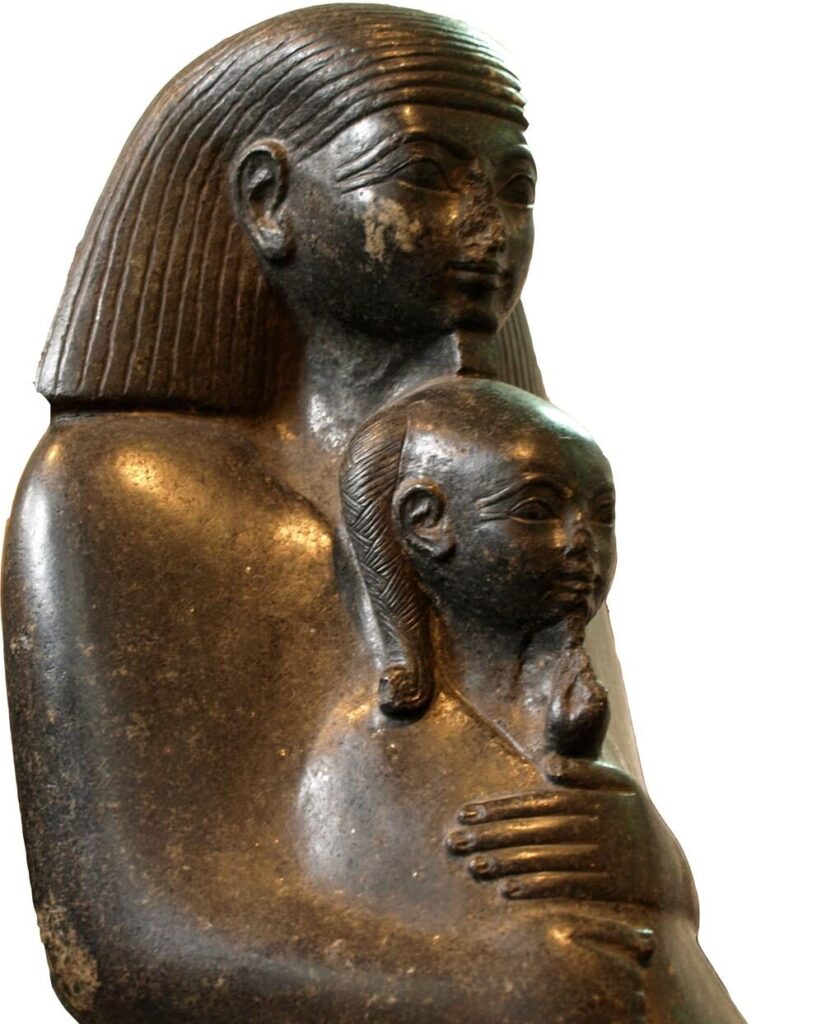
وكانت ضفيرة الطفولة (Sidelock of Youth) إحدى العلامات المميزة لتصوير الأطفال في الفن المصري القديم، خصوصًا أبناء الأسر الملكية، وظهرت في تماثيل تصور نفرو رع مع مربيها والمسؤول الملكي سننموت.
وفي أحد أشهر هذه التماثيل، المحفوظ بالمتحف البريطاني، تجلس الأميرة الصغيرة داخل عباءة سننموت، وقد ظهرت بخصلة شعر جانبية، مع وضع إصبعها بالقرب من فمها، في تصوير يحمل علامات الطفولة المعروفة في الفن المصري القديم.
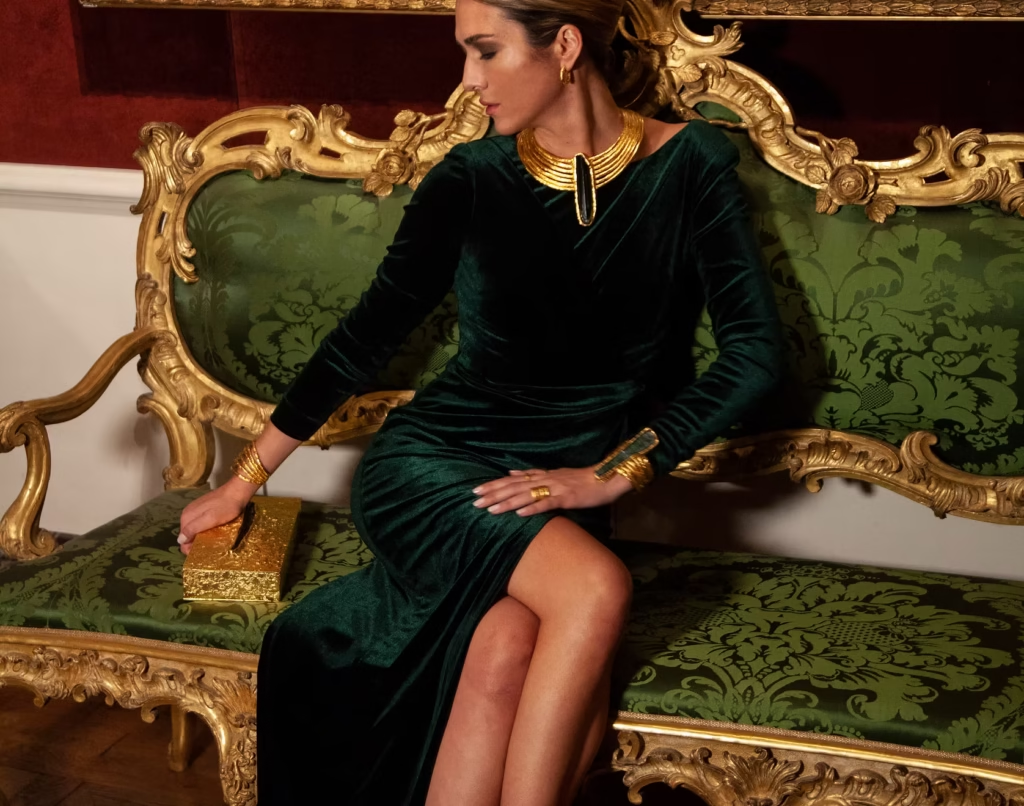
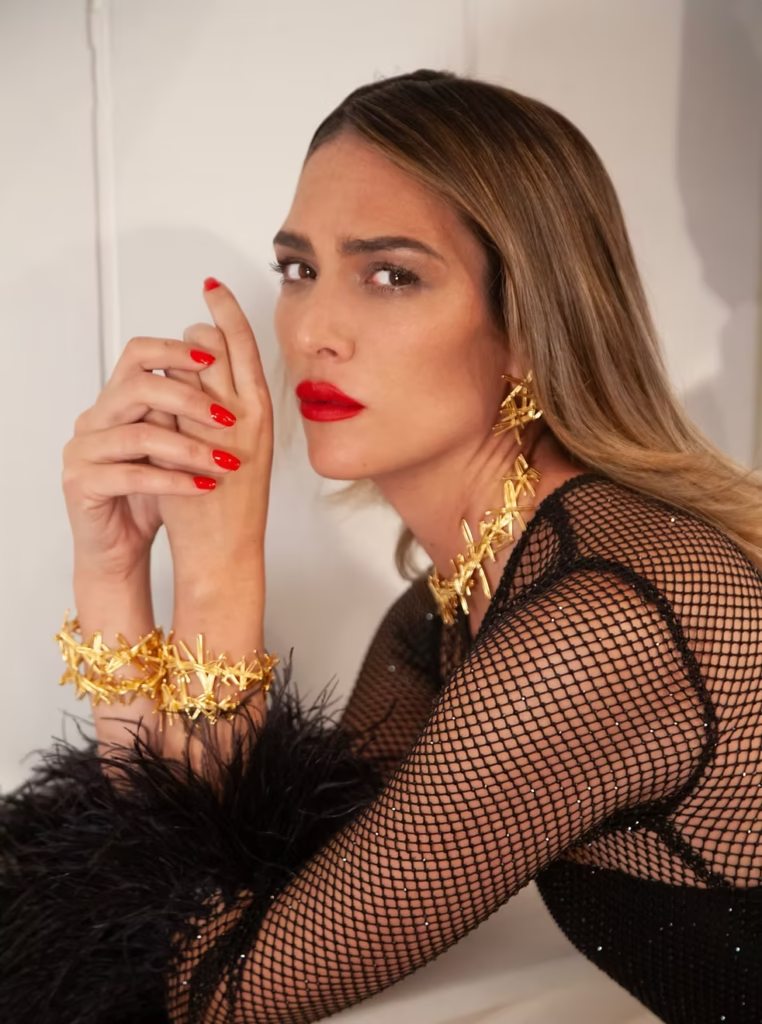
ومن هذه التفصيلة الصغيرة استمدت جوليا الفكرة البنائية للعقد، إذ تحولت الضفيرة إلى تشكيل معدني ذهبي اللون يلتف حول العنق، ثم ينساب في خطوط متضافرة على الصدر، بما يستحضر حركة الشعر المجدول.
وتتجاوز الفكرة مجرد محاكاة شكل الضفيرة، فالمصممة تقدمها باعتبارها رمزًا لنهاية الطفولة وبداية المصير الملكي، حيث كان قص الضفيرة عند القدماء يعني انتهاء مرحلة الطفولة وبدء مرحلة الشباب، وهو التفسير الذي عبرت عنه في منشورها عن تصميم Neferura.
وبذلك تصبح القطعة أقرب إلى منحوتة ترتدى حول العنق، تحمل إشارة إلى شخصية تاريخية محددة ومرحلة إنسانية في حياتها، بدلًا من الاكتفاء بزخرفة مصرية قديمة متداولة.
21 نجمة لحتشبسوت.. المجوهرات تستحضر الأبدية
في تصميم آخر يحمل اسم “سلام- SALAM”، تتجه جوليا إلى السماء والرموز الجنائزية التي ارتبطت لدى المصري القديم بفكرة البقاء بعد الموت.
وتقدم المصممة عقدًا قصيرًا يحيط بالعنق، تتجاور فيه تشكيلات معدنية دقيقة مستوحاة من النجوم، في بناء زخرفي متصل يمنح القطعة إيقاعًا بصريًا من الخطوط والتقاطعات، ويضم العقد 21 نجمة، اختارتها جوليا تكريمًا لسنوات حكم الملكة حتشبسوت، وفق الفكرة التي شرحتها في منشورها المصاحب للتصميم.
وتربط المصممة بين النجوم التي زينت أسقف المقابر المصرية القديمة وبين تصور الرحلة نحو الأبدية، إذ كانت السماء وعناصرها جزءًا أساسيًا من التصورات الدينية المرتبطة بالعالم الآخر وتجدد الحياة.
أما اسم “سلام” الذي اختارته للقطعة، فيضيف معنى إنسانيًا معاصرًا إلى الرمز المصري القديم، لتجتمع فكرة السلام مع الأبدية في عقد واحد.
ولا تتعامل جوليا هنا مع النجمة باعتبارها وحدة زخرفية فحسب، وإنما تجعل من تكرارها وعددها جزءًا من القصة التي يستند إليها التصميم.
حتشبسوت.. اسم الملكة في خرطوش معاصر
يحضر اسم حتشبسوت أيضًا من خلال قلادة طويلة تتدلى منها وحدة بيضاوية مستطيلة تشبه الخرطوش الملكي المصري، يحمل سطحها تشكيلات بارزة تستعيد هيئة الكتابات والرموز القديمة. ويظهر الخرطوش بإطار داكن يبرز التكوين الذهبي في مركزه، بينما يتدلى من سلسلة طويلة ذات حلقات معدنية متفاوتة الشكل.
ويعيد التصميم توظيف أحد أكثر الأشكال تميزًا في الفن الملكي المصري؛ فالخرطوش، الذي كان يحيط بأسماء الملوك والملكات، ارتبط بالهوية الملكية وباستمرار الاسم وحمايته.
وفي سياق مشروع جوليا عن حتشبسوت، يحمل هذا الاختيار دلالة إضافية، إذ تستحضر المصممة ملكة تعرضت أسماؤها وصورها للمحو في بعض آثارها بعد وفاتها، لتعيد تقديم اسمها في قطعة حُلي معاصرة.
وتنسق جوليا الخرطوش مع قطع أخرى حول العنق، في إطلالات تسمح بارتداء أكثر من تصميم معًا، وكأن الحكايات المختلفة تتجاور على الجسد.

حتحور وشجرة الجميز.. الحياة والأمومة والحماية
تتسع حكاية “الأبدية” لتشمل الإلهة حتحور، إحدى أبرز المعبودات المصرية القديمة، التي ارتبطت بالحب والموسيقى والأمومة، واتخذت في كثير من تمثيلاتها ملامح البقرة أو قرنيها.
وقدمت جوليا قطعة عريضة ملاصقة للعنق، تتدلى منها وحدة ذهبية تحمل وجهًا مبسطًا ذا ملامح مستوحاة من تصوير المعبودة، في تصميم يجمع بين استدارة الطوق وكثافة السطح المعدني وتبسيط الرمز.
وترتبط حتحور كذلك بشجرة الجميز المقدسة، التي حملت في المعتقدات المصرية القديمة دلالات الحياة والرعاية والحماية وتجدد الميلاد، وظهرت في سياقات دينية وجنائزية متعددة.
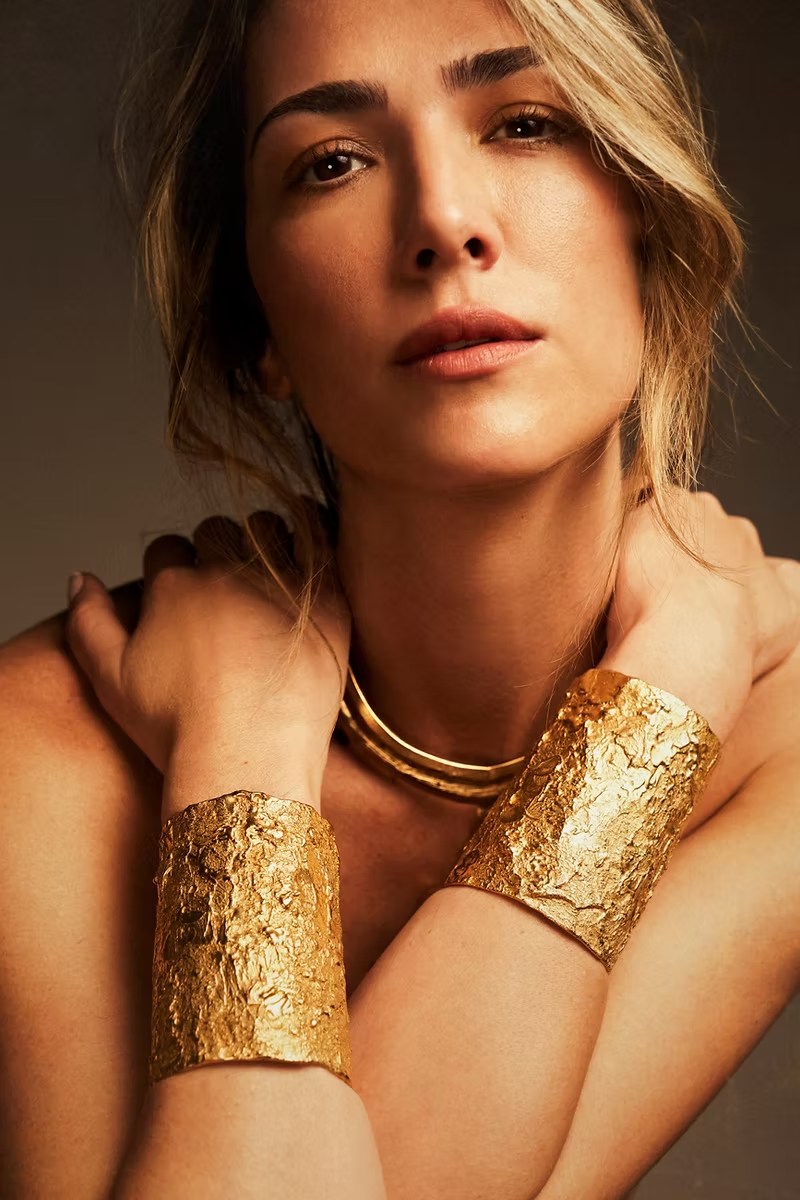
وتروي جوليا في أحد منشوراتها أنها عثرت على شجرة جميز داخل نطاق معبد الكرنك، ورأت في وجودها رمزًا قادرًا على استعادة ذكرى حتشبسوت، بعد محاولات محو اسمها وصورها من بعض المعالم الأثرية. فقامت بطبع ملمس الشجرة على كتلة لينة لتتمكن من تنفيذه كملمس للحلي التي تخلد بها ذكرى الملكة المصرية القديمة، فبالنسبة للمصممة، لم تكن الشجرة مجرد عنصر من عناصر الطبيعة، وإنما أصبحت تعبيرًا عن الحياة التي تستمر وعن الذاكرة التي يمكن استعادتها، وتكشف هذه الرؤية عن البعد الشخصي في علاقتها بالموروث المصري، فقد اختارت جوليا ألا تقدم تفسيرًا أثريًا محضًا، وقررت أن تحول ما تراه وتقرأه وتشعر به خلال زياراتها إلى مصر إلى أفكار فنية.
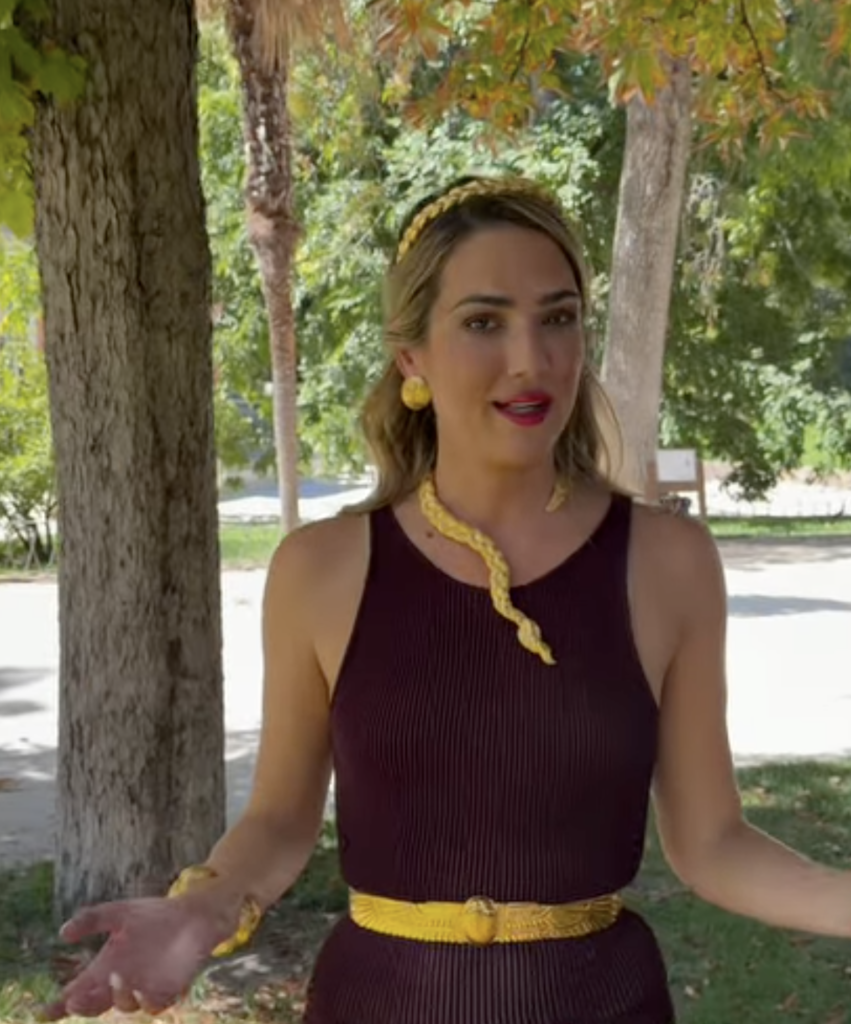
ويظهر في الصور حزام ذهبي عريض يحيط بالخصر، تتتابع فيه الوحدات والخطوط الزخرفية، وتتوسطه منطقة أكثر بروزًا، ليصبح عنصرًا رئيسيًا في الإطلالة بدلًا من مجرد وسيلة لتثبيت الملابس.
وتعيد هذه القطعة طرح العلاقة بين المجوهرات والأزياء؛ فالحزام هنا يؤدي وظيفة زخرفية ونحتية، ويستفيد من مساحة الخصر لإظهار التكوين المعدني وحركته.
كما تضم الأعمال طوقًا للشعر، يعكس اهتمام المصممة بإعادة توظيف المعدن في زينة الرأس، إلى جانب القطع التي تلتف حول العنق أو تستقر على الصدر.
ويبدو هذا التنوع مناسبًا لفلسفة جوليا، التي تتعامل مع الحُلي باعتبارها أعمالًا فنية تتفاعل مع جسم الإنسان، ولا تلتزم بالضرورة بالحدود التقليدية للعقد أو السوار أو الخاتم.
وتجمع القطع في حضورها البصري بين اللون الذهبي والتشكيلات النحتية البارزة، بينما يبرز اختيار الملابس الهادئة في مقاطع العرض تفاصيل الخطوط والملامس والأحجام.

تقنية الشمع المفقود.. من النحت اليدوي إلى البرونز المطلي بالذهب
تستخدم جوليا مونيوز تقنية الصب بالشمع المفقود (Lost-Wax Casting)، وهي تقنية عريقة في تشكيل المعادن تتيح إنتاج تكوينات معقدة ذات طابع نحتي.
تبدأ العملية بنحت نموذج التصميم في الشمع، فتتمكن المصممة من تشكيل الخطوط والانحناءات والنتوءات الدقيقة كما لو كانت تنحت عملًا فنيًا مصغرًا.
ثم يُحاط النموذج بمادة تتحمل الحرارة لتشكيل قالب، ويُزال الشمع بالتسخين، تاركًا فراغًا يحمل تفاصيل القطعة، قبل ملئه بالمعدن المنصهر.
وبعد التبريد وفصل القالب، تبدأ مراحل التنظيف والتشطيب والمعالجة السطحية، وصولًا إلى الشكل النهائي.
وتنفذ جوليا قطعها من البرونز المصبوب لدى حرفيين في مدريد، قبل إرسالها إلى باريس لطلائها بذهب عيار 24 قيراطًا.
وتؤكد المصممة أن أعمالها تبدأ بنماذج شمعية تنحتها يدويًا، دون الاعتماد على قوالب لإنتاج نسخ متطابقة، وهو ما يجعل القطع أقرب إلى أعمال فنية فردية.
وهنا ينبغي التمييز بين البرونز بوصفه المعدن الأساسي وذهب عيار 24 قيراطًا المستخدم في الطلاء؛ فالقطع ليست مصنوعة بالكامل من الذهب الخالص.
وتمنح هذه التقنية المصممة حرية في بناء الأحجام والتشكيلات التي يصعب تنفيذها بالأساليب التقليدية لتجميع الأجزاء المعدنية، فضلًا عن قدرتها على الاحتفاظ بالملامس النحتية التي تميز أسلوبها.
من هي Julia Munoz- جوليا مونيوز.. الإسبانية المسكونة بمصر؟
بدأت جوليا مونيوز، المولودة في إسبانيا عام 1983، مسيرتها في عالم الفنون الزخرفية والتحف، وافتتحت أول معرض لها في سوق Marché Serpette بباريس عام 2004.
وخلال السنوات التالية، تخصصت في الفنون الزخرفية والتصميمات الأوروبية التي تعود إلى النصف الثاني من القرن العشرين، مع اهتمام خاص بإبداعات خمسينيات وسبعينيات القرن الماضي.
وفي عام 2019، اتجهت إلى تصميم المجوهرات، مستفيدة من خبرتها السابقة في الفنون والنحت والتصميم، ثم أسست علامتها الخاصة التي تقدم من خلالها قطعًا ذات طابع نحتي واضح.
وتعرض أعمالها في باريس من خلال Galerie Portuondo، ولديها كذلك صالة عرض في مدريد تستقبل الزوار بمواعيد مسبقة.
ولم تكن مصر مجرد محطة عابرة في تجربتها؛ فقد قدمت مجموعة “Egypt”، التي استلهمتها من عمل الفنان الفرنسي JR المرتبط بأهرامات الجيزة، كما أطلقت مجموعة “Shafik” التي حملت اسم الشخص الذي استقبلها في مصر.
وتصف جوليا مصر بأنها أصبحت أحد أهم مصادر إلهامها، وهو ما يفسر تكرار حضور الحضارة المصرية في تصميماتها، لكن من زوايا مختلفة؛ مرة من خلال الأهرامات، وأخرى عبر الأشكال المستوحاة من التراث، وصولًا إلى الحكايات الإنسانية والدينية المرتبطة بالملوك والمعبودات.
وفي «الأبدية»، تبدو هذه العلاقة أكثر عمقًا، إذ لم تعد المصممة تقتبس رمزًا منفصلًا، وإنما تحاول بناء سردية فنية تجمع شخصيات وأحداثًا ومعتقدات من عصر حتشبسوت، وتترجمها إلى مجوهرات معاصرة.
وبين ضفيرة طفلة، و 21 نجمة، وخرطوش ملكي، وشجرة جميز، وطوق يحمل ملامح حتحور، تتعدد أشكال الحُلي، بينما تجمعها فكرة واحدة: أن الذاكرة يمكن أن تستمر، وأن الفن قادر على إعادة إحياء الحكايات القديمة بلغة جديدة.
وهكذا تواصل جوليا مونيوز، الإسبانية المسكونة بمصر، رحلتها مع حضارة لم تتوقف عن اكتشاف تفاصيلها، لتجعل من البرونز المطلي بالذهب وسيلة لسرد التاريخ، ومن قطعة الحُلي فصلًا صغيرًا في حكاية الأبدية.
Under Egypt’s Spell: Spanish Jewelry Designer Julia Muñoz Reimagines Hatshepsut’s Life in Her Latest Collection, ETERNA
From the childhood braid of Hatshepsut’s daughter Neferure to the stars of eternity, Hathor, and the sacred sycamore tree, Julia Muñoz transforms the Egyptian queen’s history and legacy into a narrative told through sculptural necklaces, collars, belts, and hair ornaments.
Storytelling is at the heart of Spanish jewelry designer Julia Muñoz’s creative universe. Rather than seeking inspiration solely in shapes and decorative motifs, she draws upon human experiences, mythology, personal memories, nature, and history, transforming them into sculptural metal creations that resemble miniature works of art designed to be worn.
Her sources of inspiration are remarkably diverse, ranging from abstract art and ancient legends to stories associated with people and places. She dedicated her Libya collection to someone who played an important role in the early stages of her artistic journey, honoring a country that remains close to his heart. Her Hilo Rojo (Red Thread) collection, meanwhile, draws upon the legend of an invisible thread connecting people destined to meet.
Nature, living creatures, and the sea also find their way into her creations, alongside the sculptural and artistic influences she developed during her years working in decorative arts.
Yet ancient Egyptian civilization holds a particularly special place in this diverse creative world. In Egypt’s history, myths, symbols, and historical figures, Muñoz has discovered a seemingly inexhaustible source of stories that can be transformed into contemporary jewelry.
She previously created the Egypt collection, inspired by an artwork by French artist JR at the Giza Pyramids, and the Shafik collection, named after the person who welcomed her to Egypt, a country she describes as one of her most important sources of inspiration.
In her latest collection, ETERNA, Muñoz moves beyond individual Egyptian motifs to weave a broader narrative around Queen Hatshepsut and her daughter, Princess Neferure.
She revisits the childhood braid, the stars, the royal cartouche, and ancient symbols associated with life and eternity.
Rather than simply creating Egyptian-inspired jewelry, the designer continues her distinctive practice of transforming stories into works of art, this time giving Egyptian history an especially prominent place in her creative journey.
Through necklaces, collars, belts, and hair ornaments, Muñoz explores stories connected with the queen who ruled Egypt during the Eighteenth Dynasty, her daughter Neferure, and the religious beliefs and symbols associated with life, protection, and eternity in ancient Egypt.
Drawing upon historical references that have long fascinated her, she does not attempt to reproduce ancient objects literally. Instead, she reinterprets them as small wearable sculptures, each with its own story, historical inspiration, and artistic composition.
Neferure’s Childhood Braid: A Princess’s Early Years Reimagined in Jewelry
The childhood braid is perhaps one of the most touching and deeply human inspirations in Muñoz’s latest project.
The designer chose to evoke Princess Neferure, daughter of Queen Hatshepsut and King Thutmose II, through the distinctive lock of hair worn at the side of her head, as depicted in several ancient Egyptian sculptures.
Known in Egyptology as the Sidelock of Youth, this hairstyle was one of the characteristic visual markers of childhood in ancient Egyptian art, particularly in representations of royal children.
It appears in sculptures depicting Neferure alongside her tutor and royal official, Senenmut.
In one of the most famous examples, preserved at the British Museum in London, the young princess sits on Senenmut’s lap, enveloped in his cloak. She wears the distinctive sidelock and places a finger near her mouth, both recognizable artistic conventions used to indicate childhood in ancient Egypt.
From this seemingly small historical detail, Muñoz developed the structural concept of her necklace.
The braid becomes a golden metal form that wraps around the neck before descending across the chest in intertwined, flowing strands reminiscent of plaited hair.
Yet the concept goes beyond reproducing the appearance of a braid.
Muñoz presents it as a symbol of the end of childhood and the beginning of a royal destiny, drawing upon the historical association between the sidelock and the early stages of life.
This interpretation forms part of the story she tells through her Neferura design.
The resulting piece is closer to a sculpture worn around the neck than to a conventional necklace, evoking a particular historical figure and a meaningful stage in her life rather than relying on a familiar ancient Egyptian decorative motif.
Close-up of the statue of Senenmut and Princess Neferure, showing the distinctive childhood sidelock that inspired Julia Muñoz.
21 Stars for Hatshepsut: Jewelry Inspired by Eternity
In another design, titled SALAM, Muñoz turns her attention to the heavens and the funerary symbolism through which ancient Egyptians expressed their beliefs in life beyond death.
She presents a short necklace encircling the neck, composed of delicate metal elements inspired by stars.
Arranged in a continuous composition, their intersecting lines create a distinctive visual rhythm.
The necklace features 21 stars, a number deliberately chosen by Muñoz to honor the years of Queen Hatshepsut’s reign, as the designer explains in her presentation of the piece.
Muñoz draws a connection between the stars decorating the ceilings of ancient Egyptian tombs and the journey toward eternity.
The heavens and their celestial elements played a central role in ancient Egyptian religious beliefs concerning the afterlife, rebirth, and the renewal of existence.
The name SALAM, meaning peace in Arabic, introduces a contemporary human dimension to this ancient symbolism, bringing together the concepts of peace and eternity in a single necklace.
Here, the stars are more than decorative elements. Their repetition, arrangement, and precise number form an essential part of the story behind the design.
The SALAM necklace features 21 stars honoring the years of Hatshepsut’s reign.
Hatshepsut: The Queen’s Name in a Contemporary Cartouche
Hatshepsut’s name also takes center stage in a long necklace featuring an elongated oval pendant inspired by the ancient Egyptian royal cartouche.
Its surface carries raised details recalling hieroglyphic inscriptions and ancient Egyptian symbols.
A dark border frames the cartouche, highlighting the golden composition at its center, while the pendant hangs from a long chain of metal links in varying shapes.
The design reinterprets one of the most recognizable forms of ancient Egyptian royal imagery.
Cartouches enclosed the names of kings and queens, associating the royal name with identity, protection, and enduring existence.
Within Muñoz’s collection dedicated to Hatshepsut, this choice acquires an additional layer of meaning.
The designer evokes a queen whose names and images were deliberately erased from some of her monuments after her death, restoring her name to visibility through a contemporary piece of jewelry.
Muñoz also pairs the cartouche with other necklaces, creating layered compositions in which several pieces can be worn together, as though their individual stories were unfolding side by side.
Hathor and the Sacred Sycamore: Life, Motherhood, and Protection
The narrative of ETERNA also encompasses Hathor, one of ancient Egypt’s most prominent goddesses, associated with love, music, and motherhood, and frequently represented in bovine form or with cow’s horns.
Muñoz presents a broad, close-fitting collar featuring a suspended golden element with a stylized face inspired by representations of the goddess.
The piece combines the rounded form of the collar, the substantial presence of metal, and a simplified interpretation of ancient religious imagery.
Hathor was also associated with the sacred sycamore tree, which carried meanings of life, nourishment, protection, and rebirth in ancient Egyptian religious traditions.
The tree appeared in a variety of sacred and funerary contexts.
In one of her posts, Muñoz recounts discovering a sycamore tree within the Karnak temple complex.
She interpreted its presence as a powerful symbol through which Hatshepsut’s memory could be brought back to life, following attempts to erase the queen’s name and images from certain ancient monuments.
The designer took an impression of the tree’s bark in a soft material, capturing its distinctive texture so that it could later be reproduced on the jewelry created to honor the Egyptian queen.
For Muñoz, the tree was therefore far more than a natural element.
It became an expression of enduring life and the possibility of restoring memory.
This approach reveals the deeply personal dimension of her relationship with Egyptian heritage.
Rather than offering a strictly archaeological interpretation, Muñoz chooses to transform what she observes, reads, and experiences during her visits to Egypt into artistic ideas.
The photographs also reveal a broad golden belt encircling the waist, featuring a succession of decorative elements and lines arranged around a more prominent central section.
The belt becomes a defining feature of the ensemble rather than merely a functional accessory.
It also explores the relationship between jewelry and fashion, using the waist as a space in which the sculptural qualities and movement of metal can be displayed.
The collection also includes a hair ornament, extending the designer’s interest in using metal to adorn different parts of the body, alongside pieces that wrap around the neck or rest upon the chest.
This variety of forms reflects Muñoz’s creative philosophy.
She approaches jewelry as art that interacts with the human body, without necessarily conforming to the conventional boundaries of necklaces, bracelets, or rings.
The designs share a visual language defined by golden surfaces and prominent sculptural forms, while the understated clothing featured in the presentations allows their lines, textures, and proportions to remain the focus.
Julia Muñoz presents her Neferura design, inspired by the childhood braid of Hatshepsut’s daughter.
Lost-Wax Casting: From Hand-Carved Wax to Gold-Plated Bronze
Julia Muñoz creates her jewelry using lost-wax casting, an ancient metalworking technique that allows intricate, sculptural forms to be reproduced in metal.
The process begins with a model sculpted in wax, allowing the designer to shape curves, flowing lines, and fine surface details much as a sculptor creates a miniature artwork.
The wax model is then surrounded by a heat-resistant investment material to form a mold.
The mold is heated to eliminate the wax, leaving behind a cavity that preserves the details of the original model. Molten metal is then poured into this cavity.
Once the metal has cooled and solidified, the investment mold is removed, and the casting undergoes cleaning, finishing, and surface treatment.
Muñoz’s pieces are cast in bronze by specialized artisans in Madrid before being sent to a workshop in Paris for 24-karat gold plating.
According to the designer, each creation begins as an individually hand-sculpted wax model, without relying on reusable production molds to manufacture identical copies.
This gives her pieces the character of individual works of art.
It is important to distinguish between the bronze used as the base metal and the 24-karat gold applied as a surface finish. These creations are not made entirely of solid gold.
The technique provides Muñoz with considerable freedom to develop volumes, curves, and sculptural compositions that would be difficult to achieve through conventional methods of cutting and assembling metal components.
It also allows her to preserve the textures and subtle irregularities that contribute to the distinctive character of her work.
Who Is Julia Muñoz, the Spanish Designer Under Egypt’s Spell?
Born in Spain in 1983, Julia Muñoz began her professional career in decorative arts and antiques.
In 2004, she opened her first gallery at Marché Serpette in Paris, one of the French capital’s established destinations for antiques and decorative objects.
Over the following years, she specialized in European decorative arts and design from the second half of the twentieth century, developing a particular interest in works from the 1950s and 1970s.
In 2019, she turned to jewelry design, drawing upon her experience in art, sculpture, and design.
She subsequently established her own jewelry brand, through which she presents pieces distinguished by their strong sculptural identity.
Her creations are exhibited in Paris through Galerie Portuondo, while she also maintains a showroom in Madrid that welcomes visitors by appointment.
Egypt, however, has been far more than a passing destination in her creative journey.
She previously introduced the Egypt collection, inspired by an artwork by French artist JR associated with the Giza Pyramids, and the Shafik collection, named after the person who welcomed her to Egypt.
Muñoz describes the country as having become one of her most significant sources of inspiration.
This helps explain the recurring presence of Egyptian civilization in her jewelry, although her creative approach varies from one collection to another: sometimes through the pyramids, sometimes through forms inspired by ancient heritage, and at other times through human and religious narratives associated with royalty and deities.
In ETERNA, that relationship takes on an even more elaborate narrative dimension.
Rather than borrowing an isolated motif, Muñoz constructs a visual story bringing together historical figures, events, and religious beliefs associated with Hatshepsut’s era, translating them into contemporary jewelry.
A child’s braid, 21 stars, a royal cartouche, a sycamore tree, and a collar bearing the stylized features of Hathor may take different forms, but they are united by one idea: memory can endure, and art has the power to revive ancient stories through a new visual language.
And so Julia Muñoz, the Spanish designer under Egypt’s spell, continues her journey through a civilization whose stories she never seems to tire of discovering, using gold-plated bronze to tell history and transforming each piece of jewelry into a small chapter in the story of eternity.
لقراءة المزيد:
صائغ أمريكي يطلق أداة رقمية تتيح للعملاء تصميم خواتمهم بأنفسهم رفعت المبيعات 40% خلال شهر.
مصممو المجوهرات يلجأون للجلد والصدف والراتنج في المجوهرات الراقية بعد ارتفاع سعر الذهب
عقد «سنابل القمح» يرافق «عيش» في مهرجان الجونة.. مجوهرات مصرية تدعم قضية الأمن الغذائي