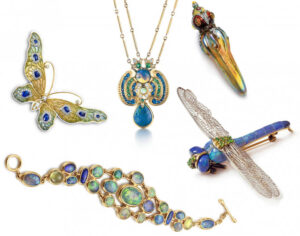
In This Feature
- How the Art Nouveau movement emerged as an artistic revolution against industrial mass production, restoring the value of craftsmanship and creativity in jewelry design.
- Why design became more important than gold and diamonds, and how René Lalique redefined the concept of luxury jewelry.
- The story of Art Nouveau’s leading pioneers—from René Lalique to Georges Fouquet and Louis Comfort Tiffany—and how they transformed jewelry into works of art.
- The defining techniques and materials of Art Nouveau jewelry, from plique-à-jour enamel to artistic glass and colorful gemstones.
- Is Art Nouveau making a comeback today? And how soaring gold prices are encouraging jewelry designers to
- embrace a philosophy reminiscent of the movement that reshaped jewelry more than a century ago.
When Machines Began Dictating Taste
By the end of the nineteenth century, European factories were producing thousands of identical pieces every day. Jewelry, once crafted entirely by hand—one piece at a time—had become increasingly mechanized. Machines could reproduce the same design endlessly, gradually transforming craftsmanship into industrial production, while uniformity became the defining characteristic of a new era.
Rather than declaring war on industry itself, artists rebelled against imitation. They rejected the idea of jewelry as a mass-produced commodity and insisted that every piece should remain a work of art bearing the unmistakable signature of its creator. From this philosophy emerged the Art Nouveau movement, which placed nature—not machinery—at the heart of design, and elevated creativity above the intrinsic value of gold and precious gemstones.
When Machines Imposed Their Aesthetic on the World
Before the Industrial Revolution, every jeweler left a personal imprint on each piece they created, making no two works exactly alike. However, as manufacturing technologies advanced during the second half of the nineteenth century, it became possible to produce hundreds of identical copies of the same design quickly and at a much lower cost.
While this made jewelry more accessible to a broader audience, it also raised concerns among artists that craftsmanship was giving way to industry, and that beauty would soon be dictated by factory standards rather than by the imagination of the designer.
Out of these concerns grew a call to restore the value of handcraftsmanship and to develop a new design language that could never be reduced to standardized patterns.
Nature Versus Uniformity and Replication
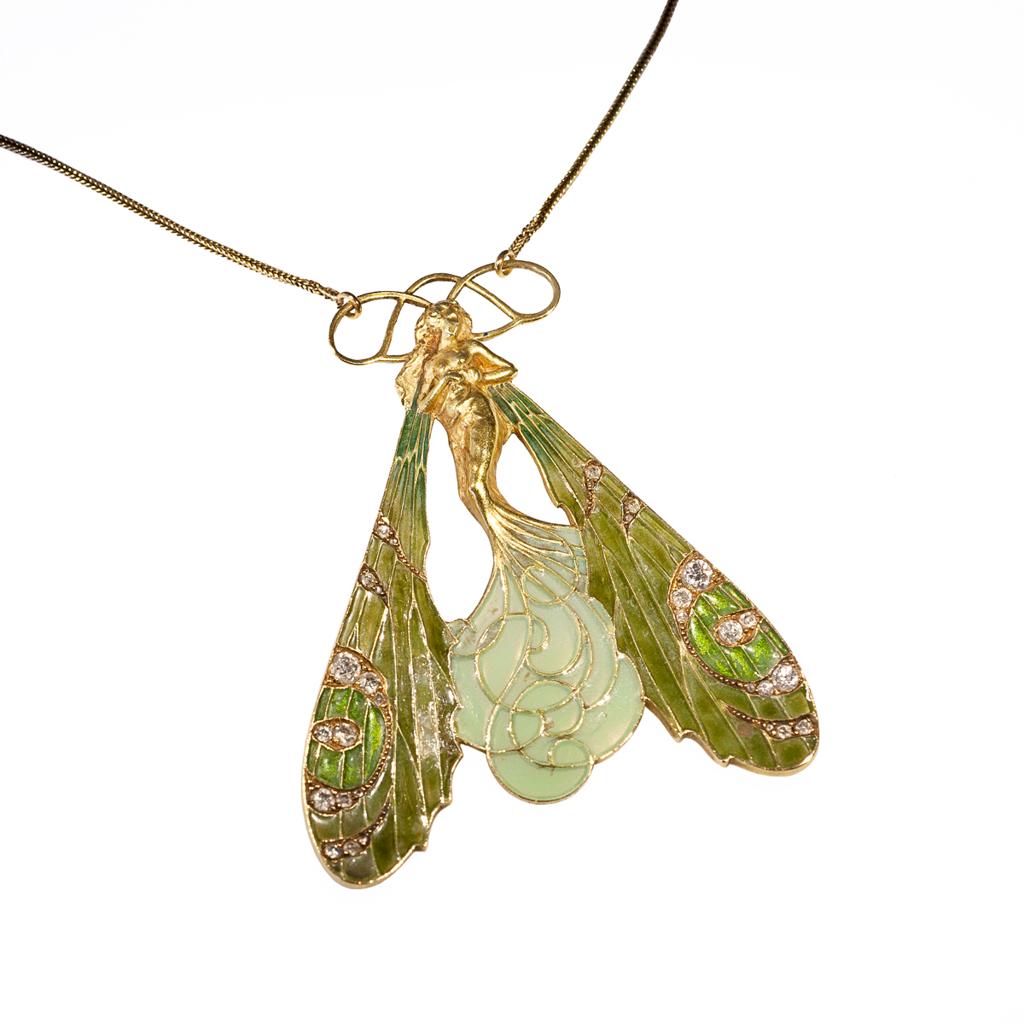
If machines excelled at repeating straight lines and perfectly regular forms, Art Nouveau artists deliberately embraced the flowing, organic lines found only in nature. And while factories produced identical copies, jewelers sought to create pieces that appeared to grow like branches or blossom like flowers.
For them, nature was never merely a decorative theme. It represented an artistic philosophy—one that challenged symmetry, repetition, and mechanical reproduction.
The Birth of Art Nouveau
The Art Nouveau movement flourished across Europe between 1890 and 1910.
It emerged as a direct response to the Industrial Revolution and the rise of mass production, which many artists believed had stripped manufactured objects of their artistic soul.
Its advocates called for a return to craftsmanship, originality, and artistic freedom.
Although Art Nouveau is widely associated with jewelry, its influence extended far beyond it, shaping architecture, furniture, glassmaking, interior decoration, and the decorative arts as a whole.
Nature: The Ultimate Source of Inspiration
Nature became the defining source of inspiration for Art Nouveau, replacing the historical and classical references that had dominated earlier artistic movements. Rather than looking to ancient civilizations or the past for inspiration, Art Nouveau embraced the living world, seeking an immediate dialogue with nature through its forms, movement, and vitality.
Its philosophy celebrated life itself by reinterpreting nature’s symbols through artistic imagination rather than literal representation. The movement championed everything that was organic, unique, and alive, standing in direct opposition to industrial production and its endless replication of identical objects devoid of individuality and craftsmanship.
Among the most recurring motifs in Art Nouveau jewelry were vines, twisting branches, flowers of every variety—including roses, lilies, and irises—along with leaves, butterflies, dragonflies, and insects.
Yet these natural elements were never reproduced exactly as they appeared in nature. Instead, each artist infused them with personal symbolism and creative interpretation, transforming familiar forms into highly expressive works of wearable art.
A Movement That Swept Across Every Design Discipline
Although Art Nouveau was born in France, it did not remain confined within French borders. The movement quickly spread across Europe and beyond, inspiring artists and designers in Belgium, Germany—where it became known as Jugendstil—and the United States. In Spain, architect Antoni Gaudí became one of its most celebrated interpreters, translating the movement’s organic philosophy into some of the world’s most iconic architectural masterpieces.
Yet Art Nouveau was never copied verbatim. Artists in every country adapted its principles to reflect their own cultural identity and artistic traditions. Like all great artistic movements, it offered a shared language rather than a rigid formula—allowing each artist to employ its techniques while expressing a distinctive personal vision.
The Masters of Art Nouveau
A remarkable generation of artists embraced Art Nouveau, producing works that achieved international acclaim thanks to their innovative aesthetics, groundbreaking techniques, and creative use of materials. By combining precious metals, gemstones, enamel, glass, and unconventional materials, they transformed jewelry into an entirely new artistic medium.
Among all its pioneers, however, one name stands above the rest: René Lalique.
Although he was far from the only master of the movement, Lalique remains its most celebrated and influential figure.
René Lalique: Why Is He the Defining Figure of Art Nouveau?
René Lalique is widely regarded as the spiritual father of Art Nouveau jewelry. Through his work, he challenged the growing dominance of industrial production in jewelry making while expressing a deeply personal artistic philosophy centered on nature, femininity, and the symbolic beauty found in every living element.
Rather than designing jewelry merely as luxurious adornment, Lalique created miniature works of art that conveyed emotion, imagination, and movement.
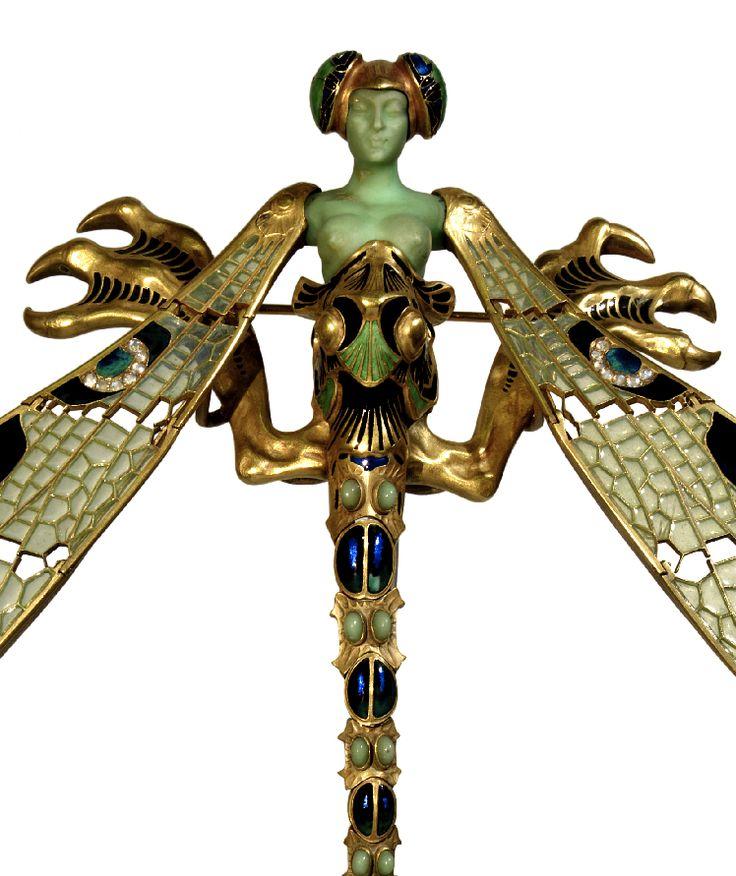
Lalique also revolutionized the very definition of luxury jewelry. He rejected the notion that a jewel’s worth should be measured by the size of its diamonds or the value of its precious materials. Instead, he placed artistic design at the center of every creation, making the concept itself—not the gemstone—the true protagonist.
His bold combinations of gold and precious gems with unconventional materials such as glass, enamel, ivory, and horn resulted in masterpieces unlike anything produced before. Their value could no longer be measured simply by the weight of gold or the rarity of gemstones, but rather by their artistic originality, craftsmanship, and historical significance.
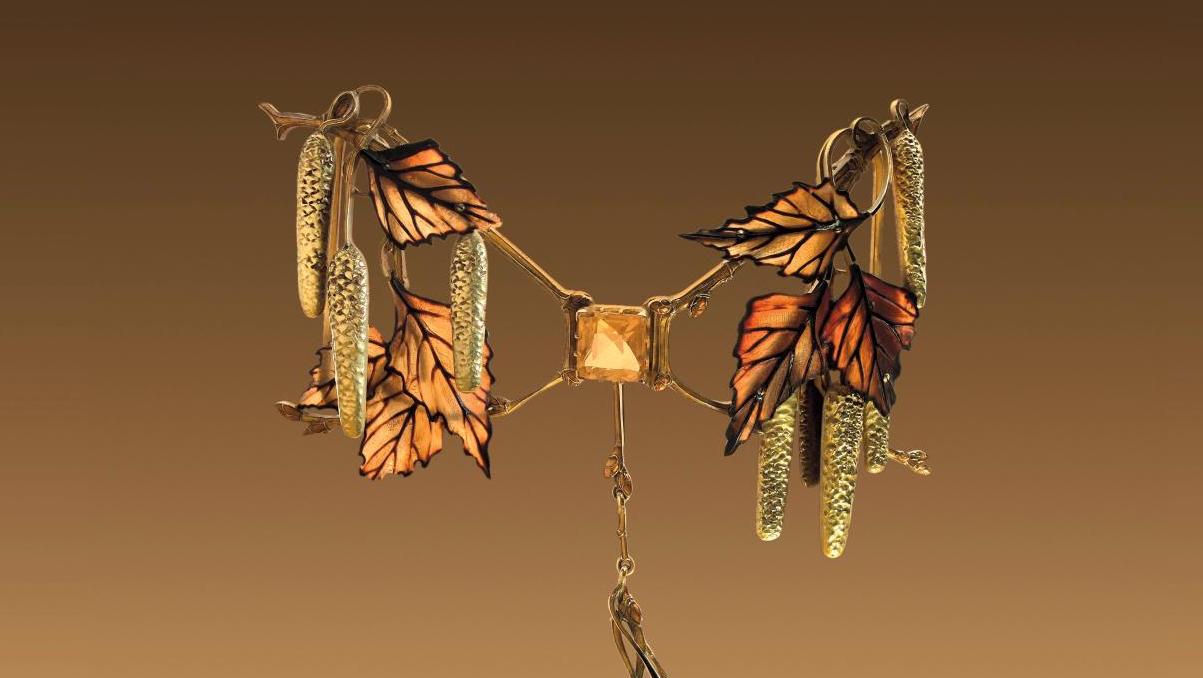
Crafted in gold, the necklace features a detachable pendant composed of two articulated sections surrounding a citrine gemstone. It is embellished with eleven raised gemstone settings and eight hazel leaves fashioned from blond tortoiseshell, highlighted with brown and black enamel—an exceptional example of Lalique’s ability to transform natural forms into wearable art.
Paris 1900: The Global Launch of Art Nouveau
Despite Lalique’s leading role, he was not the only artist to embrace this revolutionary artistic vision.
Other prominent figures, including Georges Fouquet and Louis Comfort Tiffany, were equally instrumental in shaping the movement.
The works of all three artists were showcased at the Exposition Universelle in Paris in 1900, a landmark international exhibition that introduced Art Nouveau to a global audience. The event marked the movement’s international breakthrough and paved the way for its rapid spread across Europe and the United States.
Georges Fouquet
Georges Fouquet was one of France’s most distinguished jewelers. His collaboration with Czech artist and illustrator Alphonse Mucha would become one of the most influential partnerships in the history of jewelry design.
After discovering Mucha’s remarkable illustrations, Fouquet invited him to design jewelry that he would bring to life through his own exceptional craftsmanship.
Mucha’s drawings were celebrated for their flowing lines, dreamlike female figures, flowers, plants, birds, and serpents—motifs that perfectly embodied the spirit of Art Nouveau. Fouquet transformed these artistic visions into tiaras, necklaces, brooches, rings, and bracelets, combining gold with enamel, pearls, agate, opals, and glass.
His creations became renowned for their masterful use of colored enamel, vibrant palettes, theatrical compositions, and an unmistakable sense of artistic luxury.
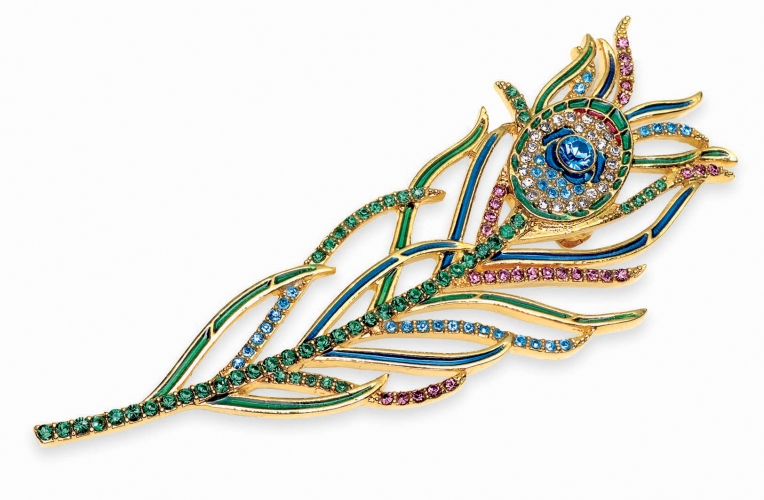
A jewelry masterpiece designed by Alphonse Mucha and crafted by Georges Fouquet—one of the collaborations that revolutionized the world of jewelry design.
Jewelry as Art
Their collaboration extended far beyond jewelry design. For the first time in the history of jewelry, the world witnessed what could emerge when a fine artist joined forces with a master jeweler. Together, Mucha and Fouquet introduced the concept of “Jewelry as Art,” demonstrating that jewelry could transcend ornamentation to become an independent artistic expression.
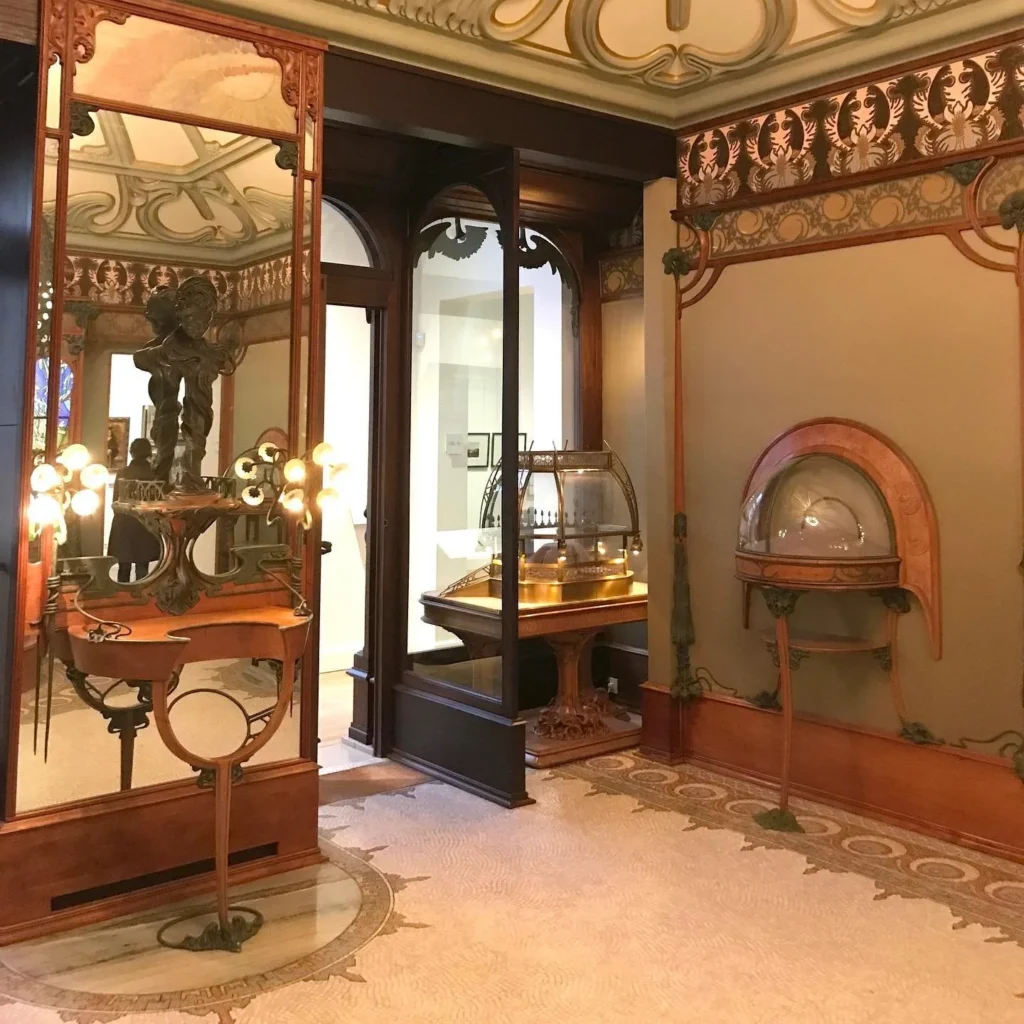
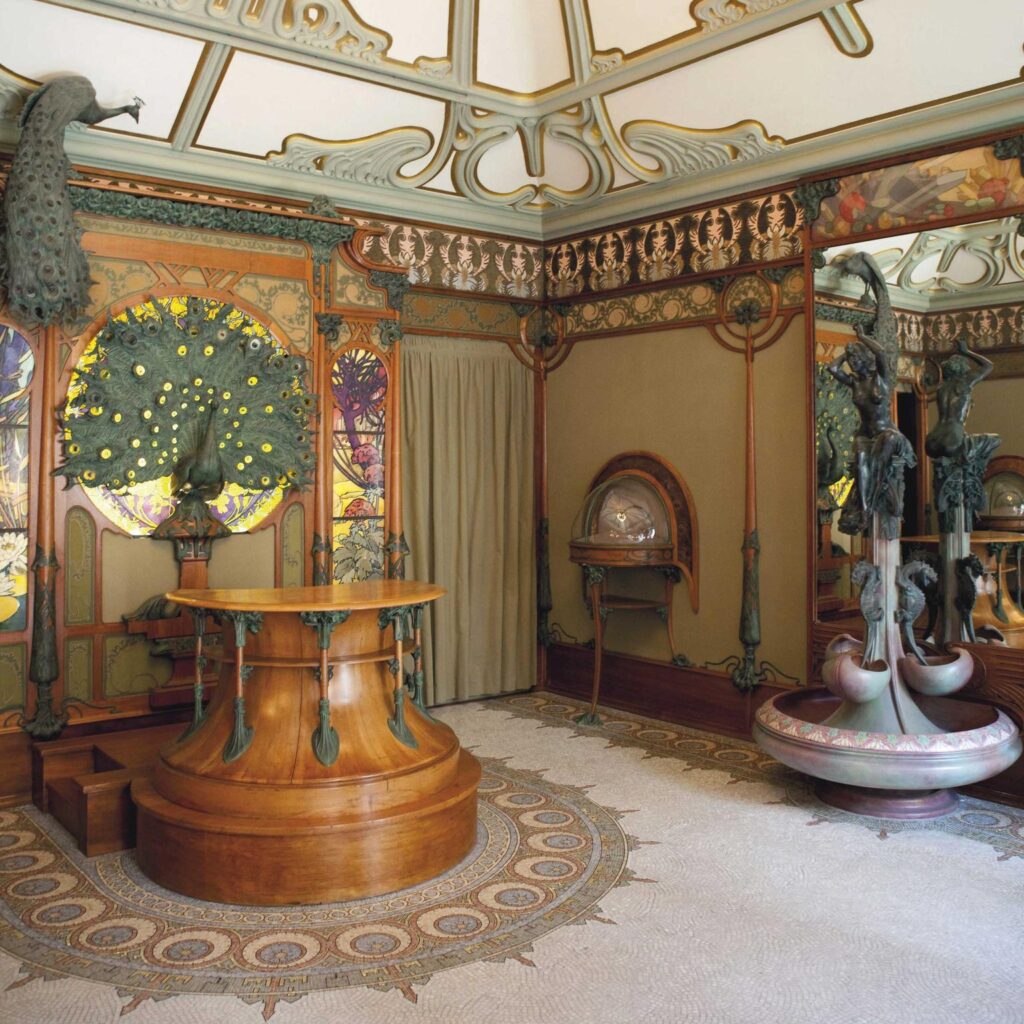
Their partnership also transformed Fouquet’s boutique on Rue Royale in Paris. Mucha designed not only the storefront but also the interior décor, furniture, and display cases, turning the boutique itself into one of Art Nouveau’s architectural masterpieces. So significant was its artistic value that parts of the original interior were later reconstructed inside the Musée Carnavalet in Paris, where they remain on display today.
The collaboration lasted for several years, producing some of the most celebrated Art Nouveau jewelry ever created.
Louis Comfort Tiffany
Although Louis Comfort Tiffany is best known as the pioneer of stained glass, he was also one of Art Nouveau’s most influential jewelry designers. He believed that all decorative arts belonged to a single artistic vision, which explains why his creative work extended across stained glass, lighting, mosaics, interior decoration, decorative glassware, and eventually jewelry.
The son of Charles Lewis Tiffany, founder of Tiffany & Co., Louis deliberately forged his own artistic path rather than beginning his career within the family business. He studied painting and fine arts and was deeply influenced by the Arts and Crafts Movement, which championed craftsmanship and artistic individuality in response to industrial mass production.
Through his work, Tiffany became one of the leading figures responsible for introducing Art Nouveau to the United States.
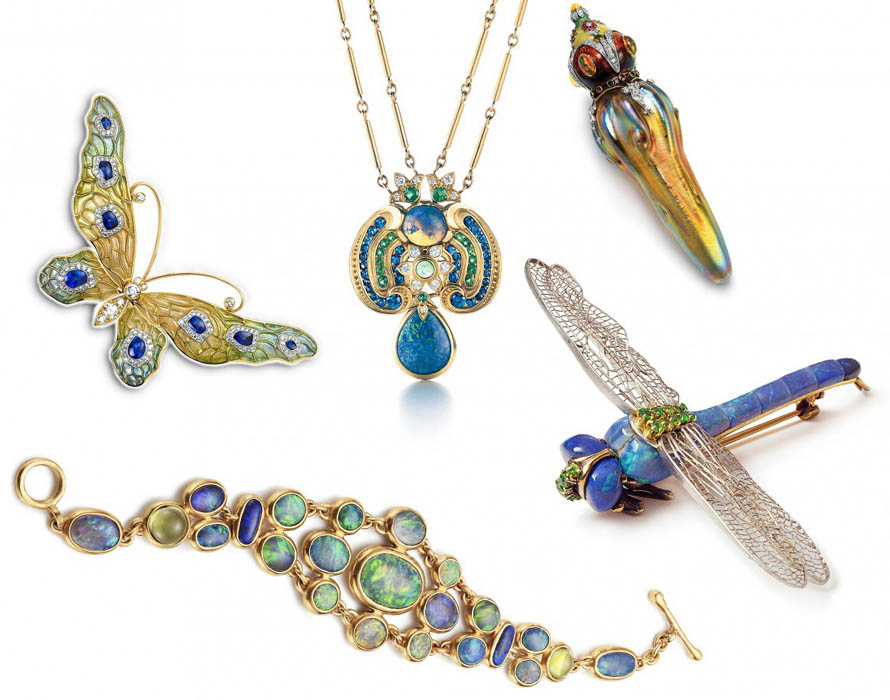
Louis Comfort Tiffany favored a rich palette of materials, including opals, luminous enamels, colored gemstones, moonstones, labradorite, baroque pearls, and agate. Rather than relying primarily on diamonds, he preferred materials capable of producing subtle variations of color and light.
His jewelry frequently celebrated nature through motifs such as irises, orchids, peacocks, and dragonflies, reflecting the movement’s fascination with the living world.
Unlike the traditional creations of Tiffany & Co. or Cartier, Tiffany’s designs placed artistic composition—not precious metals or gemstones—at the center of every piece. He firmly believed that design was more valuable than the stone itself, a philosophy he shared with René Lalique.
The Hallmark Techniques of Art Nouveau Jewelry
Art Nouveau jewelry distinguished itself through innovative enameling techniques, hand-shaped metalwork, flowing asymmetrical compositions, and the creative use of colored gemstones and artistic glass to capture light and movement. Together, these innovations elevated craftsmanship and artistic expression above the intrinsic value of precious materials.
Among the movement’s defining techniques were:
1. Plique-à-jour Enamel
Often considered the signature technique of Art Nouveau, Plique-à-jour—French for “letting in daylight”—uses translucent enamel applied without a metal backing, creating an effect similar to stained glass. René Lalique employed this technique masterfully, particularly in his dragonfly and butterfly wings.
2. Cloisonné Enamel
This technique involves creating delicate compartments on a metal surface using fine wires, which are then filled with colored enamel. It allowed jewelers to produce intricate floral and animal motifs enriched with brilliant colors.
3. Champlevé Enamel
In Champlevé, recesses are carved or engraved into the metal before being filled with enamel. Once fired and polished, the colored decoration becomes seamlessly integrated into the metal surface.
4. Repoussé and Chasing
Art Nouveau goldsmiths combined Repoussé (hammering the metal from the reverse side) with Chasing (refining details from the front) to create sculptural, three-dimensional forms inspired by leaves, flowers, vines, and insect wings, reducing reliance on gemstones alone.
5. The Use of Color-Rich Gemstones
Rather than focusing exclusively on expensive diamonds, Art Nouveau designers embraced gemstones celebrated for their unique optical qualities, including:
Opal
Moonstone
Baroque Pearl
Agate
Peridot
These were often combined with enamel and artistic glass to produce remarkable color effects.
6. Asymmetrical Design
Unlike Victorian jewelry, Art Nouveau embraced flowing, asymmetrical compositions inspired by the organic growth of plants and the movement of living creatures. This rejection of rigid symmetry gave Art Nouveau jewelry its unmistakably fluid, dynamic, and lifelike character.
Konouz News Comment
The Art Nouveau movement fundamentally reshaped the concept of luxury jewelry by challenging the long-standing dominance of gold and diamonds. Its pioneers demonstrated that exceptional design could surpass the combined value of precious metals and gemstones. Originality, rarity, artistic vision, and the philosophy embodied in a piece could elevate its worth many times over—particularly when it bore the signature of a designer whose work reflected a distinctive creative identity and enduring historical significance.
This is precisely why René Lalique’s creations now command millions of dollars at auctions and private sales, despite many of them featuring gemstones that are less valuable than those found in conventional high jewelry. Their true worth lies not in the intrinsic value of their materials, but in their artistic innovation, historical importance, and extraordinary craftsmanship—qualities that emerged at a time when industrialization threatened to reduce artistic creation to mechanical repetition.
Is Art Nouveau Making a Comeback?
Anyone following contemporary jewelry design over the past few years can hardly overlook the profound transformation taking place across the industry. Soaring—and often volatile—gold prices, combined with mounting global economic pressures, have forced designers and luxury jewelry houses to rethink traditional approaches to materials and craftsmanship.
Rather than relying almost exclusively on gold and precious gemstones, many designers are increasingly incorporating alternative materials such as textiles, natural leather, bone, wood, ceramics, titanium, and even recycled materials in pursuit of both creative freedom and sustainable design. These materials are being reimagined through advanced manufacturing techniques, allowing each designer to express a distinctive artistic identity while responding to changing consumer expectations.
In many ways, today’s economic realities echo the forces that gave birth to Art Nouveau more than a century ago. Just as the Industrial Revolution inspired artists to rebel against mechanical reproduction and mass-produced uniformity, today’s financial pressures are encouraging designers to move beyond the traditional dependence on gold and expensive gemstones.
Whether intentionally or not, the jewelry industry appears to be rediscovering one of Art Nouveau’s most enduring lessons: the true value of a jewel is not determined solely by the price of its materials, but by the originality of its design, the quality of its craftsmanship, and the story it tells.
More reading
هل ارتدت أولينا زيلينسكا قلادة مسروقة من متحف لاليك؟ ماذا يحدث إذا ثبتت صحة الإدعاء؟
Christie’s -جنيف- تطرح مجوهرات استثنائية من طراز آرت ديكو- مايو ٢٠٢٦
مصممو المجوهرات يلجأون للجلد والصدف والراتنج في المجوهرات الراقية بعد ارتفاع سعر الذهب
اتجاهات خواتم الزفاف لعام 2026 بتصميمات تعزز التفرد والمعاصرة