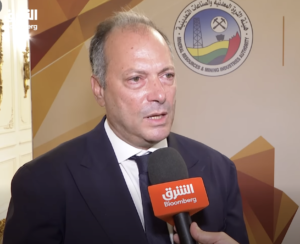

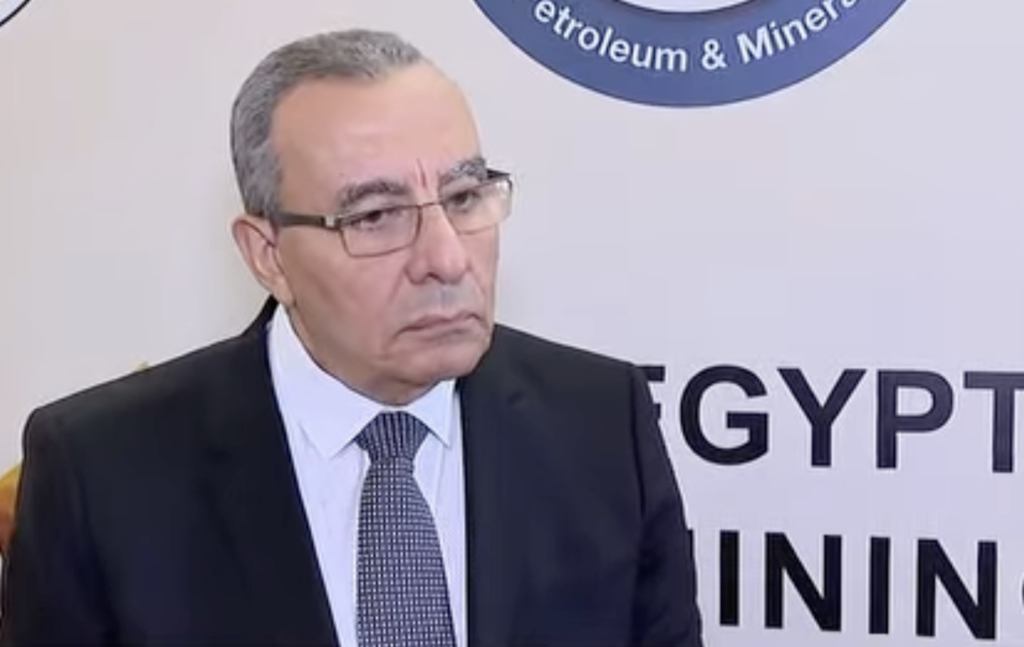
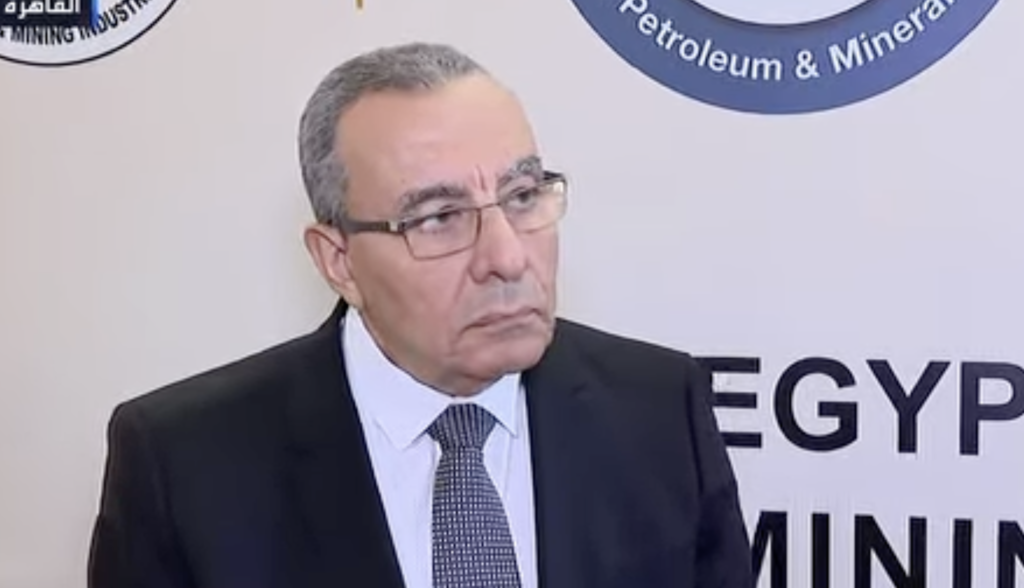
الدكتور مصطفي البحر رئيس مجلس إدارة والعضو المنتدب لشركة آفاق للتعدين في حوار خاص مع كنوز نيوز حول عمليات استكشاف الذهب وتحديات التعدين في مصر.
من قطاع البترول إلى عالم التعدين، ظلت البوصلة واحدة.. تتجه نحو البحث والاستكشاف عن الثروات الكامنة في باطن الأرض؛ وهو المجال الذي تخصص فيه الجيولوجي الدكتور مصطفى البحر على مدار مسيرة مهنية تمتد لأكثر من أربعة عقود.
بدأ دكتور مصطفى البحر مسيرته جيولوجيًا في شركة بترول خليج السويس «جابكو»، قبل أن يتدرج في عدد من المواقع القيادية بقطاع البترول والثروة المعدنية، فتولى منصب نائب رئيس الهيئة المصرية العامة للبترول للاتفاقيات والاستكشاف، ثم رئيس الهيئة المصرية العامة للثروة المعدنية، ونائب رئيس الشركة المصرية القابضة للغازات الطبيعية «إيجاس» للاتفاقيات والاستكشاف، كما تولى رئاسة شركة عجيبة للبترول.
ويخوض الجيولوجي مصطفي البحر حاليًا تجربة مختلفة على الجانب الآخر من صناعة الاستكشاف، بصفته رئيس مجلس الإدارة والعضو المنتدب لشركة آفاق للتعدين، وهي شركة باستثمارات مصرية 100% تعمل في البحث والاستكشاف عن الذهب بالصحراء الشرقية. وعلى هامش منتدى مصر للتعدين 2026، كان لـ«كنوز نيوز» معه هذا الحوار:
بداية آفاق للتعدين
- متى بدأت رحلة «آفاق» في البحث والاستكشاف عن الذهب؟ وإلى أين وصلتم اليوم؟
- حصلنا على رخصة البحث في ديسمبر 2018، وبدأنا العمل فعليًا في 2019 في المنطقة المخصصة جنوب شرق مصر- الصحراء الشرقية، ومنذ ذلك الوقت بدأت رحلة البحث والاستكشاف التي استمرت حتى 2026.
واستثمرنا 18 مليون دولار في أعمال البحث والاستكشاف بجنوب الصحراء الشرقية منذ بداية أعمال الشركة عام 2019، والحمد لله نجحنا في الوصول إلى نتائج جيدة، وتم إعداد دراسة أولية وتقييم للموارد والاحتياطيات بواسطة شركة كندية متخصصة قدرت الاحتياطي بحوالي 305 آلاف أونصة قابلة للاستخراج، وقدمنا الدراسة إلى وزارة البترول والثروة المعدنية، وتم قبولها، ونحن حاليًا في انتظار استكمال الخطوات والإجراءات الرسمية للحصول على الموافقة النهائية، على أن تبدأ خطة التنمية بمجرد الحصول على الموافقة، تستمر لمدة 4 سنوات بقيمة 164 مليون دولار, تتواصل خلالها الدراسات واختبار الاحتياطي الحقيقي، لقد كانت رحلة طويلة استمرت نحو سبع سنوات من العمل والاستكشاف والمخاطرة. - سبع سنوات فترة طويلة.. هل الاستكشاف عن الذهب يحتاج بالفعل إلى كل هذا الوقت؟
- بالتأكيد. الاستكشاف عملية علمية بالأساس، وليس مجرد أن تأخذ عينة من مكان فتجد بها ذهبًا وتقول إن لديك كشفًا. فنحن في آفاق للتعدين مررنا بمراحل كثيرة جدًا، وأخذ العينات نفسه يجب أن يتم بواسطة أشخاص لديهم المعرفة والخبرة بكيفية اختيار العينة ومكانها وطريقة التعامل معها، ثم تأتي أعمال التحليل والحفر وتقييم النتائج وصولًا إلى تقدير الموارد والاحتياطيات، الموضوع علم، وليس «عينة وحظ».
- وما المعايير التي تعتمد عليها الشركات للوصول إلى تقدير يمكن الوثوق به للموارد والاحتياطيات؟
هناك نظم ومعايير عالمية معروفة لتقييم المشروعات التعدينية. من أشهرها المدرسة الأسترالية، وهناك أيضًا المدرسة الكندية التي نعمل وفقها، وهي نظام NI 43-101، ورغم الاختلاف بين المنهجين إلا أنه في النهاية الهدف واحد: الوصول إلى نتائج وتقديرات علمية موثوقة يمكن للمستثمر وصانع القرار الاعتماد عليها، ونحن في «آفاق» اتبعنا النظام الكندي، وتم إعداد التقييم بواسطة جهة كندية متخصصة، وتم التقديم للحصول على رخصة الاستخراج بصفة رسمية وفي انتظار الموافقة لبدء العمليات.
الكوادر المصرية والخبرة العالمية
- نلاحظ الاستعانة بشركات وخبرات كندية وأسترالية في دراسات وتقييم المشروعات التعدينية وتحديد الموارد والاحتياطيات.. لماذا لا توجد شركات مصرية متخصصة تستطيع القيام بهذا الدور وفق المعايير الدولية؟
- مصر لديها بالفعل كوادر وخبرات جيدة جدًا في مجالات الجيولوجيا والاستكشاف والتعدين، ولدينا مصريون يعملون في شركات عالمية ويملكون الخبرة الفنية اللازمة. المشكلة ليست في غياب الكفاءات، وإنما في الحاجة إلى تنظيم هذه الخبرات وتطويرها داخل كيانات مصرية متخصصة تستطيع العمل وفق المعايير الدولية المعتمدة.
نحن نحتاج إلى تنظيم وقرار يدفع في هذا الاتجاه، بحيث تتجمع هذه الخبرات داخل شركات أو كيانات مؤهلة وقادرة على إعداد الدراسات والتقييمات الفنية بالمستوى المطلوب دوليًا. ومع تطور قطاع التعدين وزيادة عدد المشروعات، يمكن بناء هذه القدرات محليًا بدلًا من الاعتماد بصورة أساسية على الخبرات والشركات الأجنبية. - لكن كل هذه السنوات من الاستكشاف تعني أن المستثمر يضخ أموالًا لفترة طويلة قبل أن يعرف إن كان سيصل إلى منجم أم لا؟
- هذه هي طبيعة التعدين. مرحلة البحث والاستكشاف ذات مخاطرة مرتفعة جدًا، والمستثمر يظل ينفق سنوات قبل أن يعرف النتيجة النهائية للمشروع، دائمًا نقول إن “رأس المال جبان”، ولذلك عندما يدخل المستثمر في مشروع استكشاف تعديني فهو يتحمل مخاطرة كبيرة جدًا. نحن مثلًا في آفاق للتعدين ظللنا نحو سبع سنوات في مرحلة عالية المخاطر حتى وصلنا إلى النتائج الحالية، ولهذا فإن جذب الاستثمار إلى التعدين يحتاج إلى فهم طبيعة هذه الصناعة والمخاطر التي يتحملها المستثمر قبل الوصول إلى الإنتاج.
دخول رأس المال في التعدين.. مخاطرة محسوبة
- هل ترى أن رأس المال المصري قادر على الدخول بقوة في هذا النوع من الاستثمار؟
- بالطبع. فآفاق للتعدين شركة باستثمارات مصرية 100%، وأتمنى أن نرى مزيدًا من الشركات ورؤوس الأموال المصرية تدخل قطاع التعدين، فمصر لديها خبرات وكوادر جيدة جدًا، والمصريون موجودون بالفعل ويعملون داخل الشركات الأجنبية والعالمية. وبالتالي لدينا القدرة على بناء شركات مصرية قوية في التعدين، لكن الأمر يحتاج إلى تشجيع الاستثمار وتوفير البيئة المناسبة له.
التعدين قطاع كثيف العمالية
- وكيف انعكس نمو المشروع على حجم العمالة داخل الشركة؟
- عندما بدأنا كان عددنا تقريبًا 12 أو 13 شخصًا. ومع بداية العمل الفعلي في الجبل ارتفع العدد إلى نحو 40، واليوم وصلنا إلى حوالي 70 شخصًا، ومع انتقال المشروعات من البحث والاستكشاف إلى مراحل التطوير والإنتاج، بالتأكيد ستزداد احتياجاتها من العمالة والتخصصات المختلفة، وهو أمر طبيعي، فلو نظرنا إلى منجم السكري الآن بعد هذه السنوات من التشغيل سنجده أصبح بمثابة مدينة متكاملة.. التعدين عامة قطاع كثيف العمالة ولكنه يحتاج عمالة متخصصة وماهرج.
- كان من بين توصيات منتدى التعدين تأسيس مدرسة لتعدين الفوسفات في الوادي الجديد، ألا ترى أننا نحتاج إلى مدارس فنية متخصصة في تعدين واستخراج الذهب كتخصص قائم بذاته؟
- أنا من أشد المؤيدين للتعليم الفني، ومصر تحتاج إليه فعلًا، في الخارج هناك مسار واضح للفني المتخصص، ويتم إعداده وتدريبه بشكل علمي ليكون قادرًا على العمل بكفاءة في الصناعة. ونحن نحتاج إلى هذا النوع من العمالة الفنية المدرب، لكن يجب أيضًا أن ننظر إلى حجم السوق الذي سيستوعب هؤلاء الخريجين. إذا أنشأت مدرسة متخصصة وتخرج منها كل عام عدد كبير من الفنيين، فلا بد أن يكون لديك عدد كافٍ من المناجم والمصانع والمشروعات القادرة على تشغيلهم.
لذلك أرى أن الأمر يجب أن يسير بالتوازي: كلما زاد عدد المناجم ومصانع المعالجة والإنتاج، زادت الحاجة إلى مدارس وبرامج تعليم فني متخصصة. - وهل نقص العمالة الفنية المتخصصة يمثل مشكلة حقيقية أمام شركات التعدين؟
- بالتأكيد. عندما لا تجد الفني أو المتخصص الذي تحتاج إليه داخل السوق، تضطر إلى استقدام خبرة من الخارج، وتكون تكلفتها مرتفعة جدًا، لذلك بناء كوادر فنية مصرية ليس مجرد مسألة تعليم، ولكنه جزء من بناء صناعة تعدين متكاملة وتقليل تكلفة التشغيل على الشركات في المستقبل.
- من واقع خبرتك الطويلة في القطاع، ماذا يضيف منتدى مصر للتعدين للصناعة والمستثمرين؟
- المنتدى مهم لأنه يسلط الضوء على القطاع وعلى المشكلات والتحديات الموجودة فيه، كما أن وجود الشركات والمستثمرين والخبرات الفنية والإعلام والمسؤولين في مكان واحد يجعل المشكلات ظاهرة أمام الجميع، ويتيح مجال أوسع لمناقشتها وعرض التجارب والخبرات المختلفة.
- كدلك وجود الشركات والخبرات الدولية يتيح التعرف على التطورات والتقنيات المستخدمة عالميًا، وفي النهاية تصل الصورة بشكل أوضح إلى صانع القرار، هذه المنتديات تعطي نوعًا من الـHighlight أو Flash على القطاع: أين توجد الفرص، وأين توجد المشكلات، وما الذي يحتاج إلى تدخل أو قرار.
Chairman and Managing Director in an Exclusive Interview with Knouz News
Dr. Mostafa El Bahr: Seven Years of Exploration Led AFAQ Mining to 305,000 Ounces of Recoverable Gold
Dr. Mostafa El Bahr, Chairman and Managing Director of AFAQ Mining, speaks exclusively to Knouz News about gold exploration, mining investment and the challenges facing Egypt’s mining industry.
From the petroleum sector to the world of mining, the compass has remained pointed in the same direction: the search for and exploration of resources hidden beneath the earth’s surface. It is a field in which geologist Dr. Mostafa El Bahr has built a professional career spanning more than four decades.
El Bahr began his career as a geologist with the Gulf of Suez Petroleum Company (GUPCO) before moving through a number of senior leadership positions in Egypt’s petroleum and mineral resources sectors. He served as Vice Chairman of the Egyptian General Petroleum Corporation (EGPC) for Agreements and Exploration, then as Chairman of the Egyptian Mineral Resources Authority (EMRA) and Vice Chairman of the Egyptian Natural Gas Holding Company (EGAS) for Agreements and Exploration. He also served as Chairman of Agiba Petroleum Company.
Today, El Bahr is pursuing a different chapter in the exploration industry as Chairman and Managing Director of AFAQ , a 100% Egyptian-owned company engaged in gold exploration in Egypt’s Eastern Desert.
On the sidelines of the Egypt Mining Forum 2026, Knouz News sat down with El Bahr for the following interview:
The Beginning of AFAQ Mining
When did AFAQ’s gold exploration journey begin, and where does the company stand today?
We obtained the exploration licence in December 2018 and began operations in 2019 in our designated area in southeastern Egypt, in the Eastern Desert. That marked the beginning of an exploration journey that continued through 2026.
Since the company began operations in 2019, we have invested $18 million in exploration activities in the southern Eastern Desert.
Fortunately, we achieved good results. A preliminary study was prepared, and the mineral resources and reserves were evaluated by P&E Mining Consultants Inc., a specialised Canadian mining consultancy. The evaluation estimated approximately 305,000 ounces of recoverable gold reserves.
We submitted the study to the Ministry of Petroleum and Mineral Resources, where it was accepted, and we are currently awaiting completion of the formal procedures and final approval.
Once approval is granted, we will begin implementing a four-year development plan involving approximately $146 million in investment. During that period, studies and additional work will continue to further test and update the reserve estimate.
It has been a long journey — around seven years of work, exploration and risk-taking.
Seven years is a long time. Does gold exploration really require that much time?
Absolutely. Exploration is fundamentally a scientific process. It is not simply a matter of taking a sample from somewhere, finding gold in it and declaring that you have made a discovery.
At AFAQ Mining, we went through many different stages. Even sampling itself has to be carried out by people with the knowledge and experience to determine how a sample should be selected, where it should be taken from and how it should be handled.
This is followed by laboratory analysis, drilling and evaluation of the results, ultimately leading to estimates of mineral resources and reserves.
It is science — not simply “a sample and some luck.”
What standards do companies follow to produce reliable estimates of mineral resources and reserves?
There are internationally recognised systems and standards for evaluating and reporting mining projects. Among the best known is Australia’s JORC Code, while in Canada NI 43-101 provides the regulatory framework under which mineral project information is reported.
Although the systems differ in their requirements and approach, the ultimate objective is the same: to produce scientifically robust and reliable estimates that investors and decision-makers can rely on.
At AFAQ, we followed the Canadian framework. The technical evaluation was prepared by a specialised Canadian consultancy, and we have formally applied for an exploitation licence. We are now awaiting approval to move into the next phase of operations.
Egyptian Expertise and International Experience
Mining projects in Egypt often rely on Canadian, Australian and other international specialists to prepare technical studies and estimate mineral resources and reserves. Why does Egypt still rely heavily on overseas expertise for work that could eventually be undertaken by specialised Egyptian firms?
Egypt already has highly capable professionals and considerable expertise in geology, exploration and mining. Egyptian professionals are working in international companies and possess the necessary technical expertise.
The problem is not a lack of qualified people. What we need is to organise and develop this expertise within specialised Egyptian entities capable of operating in accordance with internationally recognised standards.
We need an organisational framework and a clear decision to move in this direction, bringing these professionals together within qualified companies or entities capable of preparing technical studies and evaluations to the standards required internationally.
As Egypt’s mining sector develops and the number of projects increases, these capabilities can be built locally, reducing the sector’s reliance on foreign expertise and international companies.
But all those years of exploration mean investors may continue committing capital for a long period before knowing whether a project will actually become a mine.
That is the nature of mining. The exploration stage involves a very high level of risk, and investors may continue spending for years before knowing the ultimate outcome of a project.
We often say that “capital is cautious.” When investors enter a mineral exploration project, they assume a very high level of risk.
At AFAQ Mining, for example, we spent around seven years in a high-risk phase before reaching our current results.
Attracting investment into mining therefore requires an understanding of the nature of the industry and the risks investors assume before a project ever reaches production.
Mining Investment: A Calculated Risk
Do you believe Egyptian capital can play a stronger role in this type of investment?
Certainly. AFAQ Mining is a 100% Egyptian-owned company, and I hope to see more Egyptian companies and Egyptian capital entering the mining sector.
Egypt has highly capable professionals and considerable expertise, and Egyptians are already working within foreign and international mining companies.
We therefore have the ability to build strong Egyptian mining companies, but this requires encouraging investment and providing the right environment for them to grow.
Mining Is a Labour-Intensive Industry
How has the growth of the project affected the size of AFAQ’s workforce?
When we started, there were only around 12 or 13 people. Once field operations began, the number increased to around 40, and today we have approximately 70 people.
As projects move from exploration into development and production, their need for workers and different areas of expertise naturally increases.
If we look at the Sukari Gold Mine today, after all these years of operation, it has effectively developed into an integrated community.
Mining is generally a labour-intensive industry, but it requires a skilled and specialised workforce.
One of the recommendations discussed at the Mining Forum was the establishment of a technical school for phosphate mining in the New Valley. Do you think Egypt also needs specialised technical schools dedicated specifically to gold mining and processing?
I am a strong supporter of technical education, and Egypt genuinely needs it.
In other countries, there is a clear career path for specialised technicians, who receive structured education and scientific training that enables them to work efficiently in industry.
We need this kind of trained technical workforce. At the same time, however, we must consider the size of the market that will absorb these graduates.
If you establish a specialised school that graduates a large number of technicians every year, you must have enough mines, processing plants and projects capable of employing them.
I therefore believe the two sides must develop in parallel: as the number of mines, processing plants and producing projects increases, so too will the need for specialised technical schools and vocational training programmes.
Does the shortage of specialised technicians represent a genuine challenge for mining companies?
Definitely. When a company cannot find the technician or specialist it needs in the local market, it has to bring in expertise from abroad, often at a very high cost.
Building Egyptian technical capabilities is therefore not simply an educational issue. It is part of building an integrated mining industry and reducing companies’ operating costs in the future.
Based on your long experience in the sector, what does the Egypt Mining Forum add to the industry and to investors?
The Forum is important because it puts the spotlight on the sector and on the problems and challenges it faces.
Bringing companies, investors, technical experts, the media and government officials together in one place makes these challenges visible to everyone and creates a broader space for discussing them and sharing different experiences and expertise.
The presence of international companies and experts also provides an opportunity to learn about global developments and the technologies being used across the industry.
Ultimately, it gives decision-makers a clearer picture of the sector.
Forums like this provide a spotlight — a snapshot of the industry: where the opportunities are, where the problems lie, and what requires intervention or a decision.
- كدلك وجود الشركات والخبرات الدولية يتيح التعرف على التطورات والتقنيات المستخدمة عالميًا، وفي النهاية تصل الصورة بشكل أوضح إلى صانع القرار، هذه المنتديات تعطي نوعًا من الـHighlight أو Flash على القطاع: أين توجد الفرص، وأين توجد المشكلات، وما الذي يحتاج إلى تدخل أو قرار.
لقراءة المزيد:
بحضور الرئيس السيسي.. منتدى مصر للتعدين يضع الإصلاحات أمام اختبار الاستثمار
بدوي يبحث خطط آفاق للتعدين لاستخراج الذهب بعد سبع سنوات من عمليات الاستكشاف
على هامش منتدى مصر للتعدين 2026.. إطلاق منتدى الهيئات التنظيمية للمعادن الأفريقية AFMRA من القاهرة
المنتدى الدولي للمعادن والأحجار الثمينة يعقد جلسته الثالثة بعنوان: “توطين صناعة الذهب والمجوهرات”